Types of Fish Finders: Which Kind Fits How You Fish?
The right type of fish finder depends on where you fish and how you want to use it: choose a fixed unit for a boat, a portable or castable setup for a kayak, and an ice fishing bundle for winter trips. Then compare sonar views and GPS needs.
On this page (8 sections)
- What are the main types of fish finders?
- What sonar views can a fish finder show?
- Do you need GPS and mapping on a fish finder?
- Which screen and controls should you choose?
- What should you check before buying a fish finder?
- Which fish finder type fits each use?
- How do you choose between portable and mounted sonar?
- Which type of fish finder should you pick?
The right type of fish finder depends on where you fish and how you want to use it. Choose a fixed unit for a boat, portable or castable sonar for flexible use, and an ice fishing setup for winter trips.
Then narrow your choice by sonar view, screen, GPS and mapping. A fish finder can help you read what is below the transducer, but the best fit depends on how you fish and what you want to learn from the screen.
If you’re new to sonar, start with how a fish finder works. This guide compares the main types and links to more focused advice for each setup.
What are the main types of fish finders?
The main types are boat-mounted units, paddle-craft systems, ice fishing setups and castable sonars. These describe how and where you use the equipment; sonar and GPS features create a second set of choices.
| Type | Suits | Main choice |
|---|---|---|
| Boat-mounted | Small boats and larger vessels | Mounting location, screen and sonar views |
| Paddle-craft | Kayaks and other small craft | Compact installation or a portable, castable unit |
| Ice fishing | Fishing through a hole in the ice | Ice-ready transducer, portable power and carrying case |
| Castable | Shore, dock and some small-craft fishing | Wireless connection, phone use and how you’ll retrieve it |
Some models fit more than one setting. A portable unit may work on a boat and for ice fishing if you have the right transducer and accessories, but check that the full setup supports both uses.
Which fish finder type fits your fishing setup?
Match the device to your mounting options and how often you move it. A fixed head unit can stay installed on one boat, while portable equipment can move between locations.
Boat owners often choose a transom or trolling-motor transducer with a display mounted within view. For a smaller boat, compare the screen size and mounting space before choosing a larger unit; our fish finders for a 14-foot aluminum boat guide covers that decision.
Kayak anglers may prefer a compact display or a castable sonar that works with a phone. Think through where the transducer will sit, how the cable or wireless connection will be managed, and where the display can be seen while paddling.
See our portable fish finder options for kayaks for examples.
For ice fishing, the transducer needs to suit use through a hole in the ice. A bundle can make setup simpler by grouping the transducer and portable accessories, though you should still check what is included.
What sonar views can a fish finder show?
Traditional sonar gives you a view beneath the transducer, while scanning sonar adds views of underwater structure. The right choice depends on whether you mostly want to watch the water below or look for cover around you.
Traditional sonar sends sound pulses and uses their returns to show depth, bottom and targets. CHIRP sonar sweeps a range of frequencies, which can help distinguish targets and structure on compatible systems.
Down imaging or down scanning adds a more detailed view below the boat. Side imaging looks to the sides, which can help you search a broader area for cover before moving over it.
Features and names vary by model, so compare the specific sonar views included.
| Sonar view | What it helps you examine | Consider it if |
|---|---|---|
| Traditional 2D | Depth, bottom and sonar targets beneath the transducer | You want a basic sonar view or fish arches |
| CHIRP traditional | A frequency sweep used to show targets and structure | You want to compare target separation features |
| Down imaging | Structure below the boat with a scanning view | You want more detail under your position |
| Side imaging | Structure to either side of the boat | You want to search cover before passing over it |
A sonar screen is a representation of returning sound, not a camera image. Learn how to read a fish finder screen before treating every mark as a fish.
Is CHIRP the same as imaging sonar?
No. CHIRP describes how traditional sonar sends a range of frequencies; imaging sonar describes a scanning view.
Some fish finders combine CHIRP traditional sonar with down or side imaging, while others offer only one kind of view.
Compare the actual modes and transducer included with the unit. A name such as “CHIRP” alone does not tell you whether the device can scan to the sides or show a down-imaging view.
Do you need GPS and mapping on a fish finder?
GPS is useful if you want to mark spots and return to them. Mapping can add depth contours or charts, but the functions and coverage differ by unit.
A fish finder with GPS may let you save waypoints or build routes. Some models add built-in mapping features, while others support compatible chart products.
Check whether the unit includes the map coverage you need and whether it can create maps on the water.
GPS and sonar solve different tasks. GPS helps record where you are; sonar shows what is beneath or around the transducer.
Our guide to fish finders with GPS compares units that combine those jobs.
If you mostly fish familiar water and only need to see depth and targets, you may not need extensive mapping. If you explore new water or want to revisit productive locations, waypoint and chart features can matter more.
Which screen and controls should you choose?
Choose a screen you can read from your normal fishing position. Screen size, display type, viewing angle and control style all affect day-to-day use.
A smaller screen takes less space, but it can make split views harder to read. A larger display can show more information at once, yet it needs more room on the console or kayak.
If you’re comparing compact models, see our best 7-inch fish finder and GPS combos guide for that screen size.
Controls matter too. Button-based controls may be easier to use with wet hands, while a touch display can make some menus quicker to access.
Check the interface and mounting position before deciding which style suits you.
What should you check before buying a fish finder?
Start with transducer compatibility, mounting and power, then compare sonar, GPS and display features. The head unit alone does not tell you whether the full setup fits your boat or fishing style.
Check these points before you choose:
- Transducer: Confirm the type and mounting style, and whether it supports the sonar views you want.
- Mounting: Check that the display and transducer can be positioned securely on your craft.
- Power: Make sure the power source works for your boat, kayak or portable setup.
- Screen: Consider whether the display is easy to see from where you fish.
- GPS and maps: Decide whether you need waypoints, routes, charts or map creation.
- Season: If you fish through the ice, check for an ice transducer and portable accessories.
- Setup: Review what comes in the box so you know which mounting parts or cables you may need.
For fixed boat installations, our guide to where to mount a fish finder transducer explains why placement matters. Kayak owners can also read how to mount a fish finder on a kayak before choosing between a permanent and portable setup.
Which fish finder type fits each use?
The best type is the one that fits your craft, season and preferred sonar view. These examples show how the categories can translate into specific equipment choices.
Fixed boat unit with CHIRP and scanning sonar
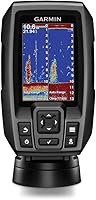
A fixed unit suits an angler who wants a display mounted on the boat with traditional sonar and a scanning view. The Garmin Striker Vivid 4cv includes a 4-inch color display, GT20 transducer, CHIRP traditional sonar, CHIRP ClearVü scanning sonar and GPS for waypoints and routes.
Its built-in Quickdraw Contours mapping adds map creation. Check that the screen size and bail mount fit your console or other mounting spot.
Larger boat display with GPS and mapping
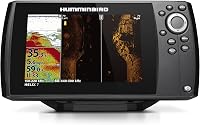
A larger screen can suit boat anglers who want more room to view sonar and navigation information. The Humminbird Helix 5 CHIRP GPS G3 has a 5-inch color display, Dual Spectrum CHIRP sonar, GPS, Humminbird Basemap and AutoChart Live mapping.
Its keypad controls may suit anglers who prefer physical buttons. Compare the available map coverage and compatible chart options with the waters you fish.
Castable sonar for flexible locations
A castable unit can suit shore or dock fishing, or a portable setup where you don’t want to install a fixed display. The Deeper PRO+ 2 is wireless, battery-powered and connects with the Fish Deeper app; its GPS supports bathymetric map creation from shore, a dock or a bank.
Its three beam options give you different coverage choices. Consider how you’ll cast, retrieve and view the app during a session.
Ice fishing bundle for winter and open water
An ice fishing bundle suits an angler who wants equipment packaged for portable use through the ice. The Garmin Striker Plus 4 Ice Fishing Bundle includes a 4-inch color fishfinder, dual-beam ice transducer, carrying case, rechargeable battery and charger.
The bundle also includes GPS and Quickdraw Contours mapping. Garmin describes it for ice or open water; for open-water use, the description says a separate GT20, GT22 or GT23 transducer is required.
How do you choose between portable and mounted sonar?
Choose a mounted unit if it will stay on one craft and you want a dedicated display. Choose portable or castable sonar if moving between locations matters more than having a permanently installed screen.
A boat-mounted unit can keep its display and transducer in fixed positions. That can make the setup straightforward once installed, but it may not suit someone who wants to move electronics among several craft.
Portable units can be easier to carry from one spot to another, though you still need a plan for power, storage and viewing. A castable sonar reduces mounting needs, but depends on a compatible phone or app and a way to retrieve the sonar safely.
For kayak use, compare the portable option with the mounting space and battery setup available on your craft. Our paddle-craft sonar guide covers the choices in more detail.
Which type of fish finder should you pick?
Pick a boat-mounted unit if you want a dedicated display and transducer on one boat; choose portable or castable sonar if you fish from shore or move equipment between locations. For winter trips, start with an ice setup that includes a compatible ice transducer.
Then decide whether traditional sonar is enough or whether you want scanning views, GPS or mapping. For help comparing the basic sonar concepts, read fish finder or depth finder, then use the matching category guide for your craft or season.
Frequently asked questions
What are the main types of fish finders?
The main types are fixed boat units, portable or castable sonars, and ice fishing setups. They can also differ by sonar view, such as traditional sonar or scanning sonar, and by whether GPS and mapping are included.
Choose by your fishing location, mounting options and need to save or revisit spots.
Is a portable fish finder good for a kayak?
A portable or castable fish finder can suit a kayak when you want to avoid a permanent installation. Check how the sonar connects to its display or phone, how you will secure it, and whether its beam options match the water you fish.
A fixed unit may fit better if your kayak is already rigged for electronics.
Do I need GPS on a fish finder?
GPS helps you mark locations and return to them, and some units also support routes or mapping. If you fish familiar water and only want a live sonar view, GPS may be less important.
For exploring new water or saving productive spots, compare the unit's waypoint and mapping features.
Can one fish finder work for boat and ice fishing?
Some fish finders can be used in open water and through the ice, but the transducer, power setup and mounting needs can differ. Check that the unit supports the transducer and accessories for each setting.
An ice bundle can include a portable case and an ice fishing transducer.
What is the difference between a fish finder and a depth finder?
A depth finder focuses on water depth, while a fish finder adds sonar views that can help show fish targets and underwater structure. Many modern units combine depth readings with traditional or scanning sonar, and some add GPS and mapping.
Compare the features you need rather than relying on the name alone.