What Is a Fish Finder Used For?
A fish finder uses sonar to show depth, fish targets, and underwater structure beneath or around your boat. Many models also help you mark locations so you can return to them.
On this page (7 sections)
A fish finder uses sonar to show depth, fish targets, and underwater structure beneath or around your boat. Many models also help you mark locations so you can return to them.
That information can help you choose where to cast, how deep to fish, and whether a spot has cover or a drop-off. A fish finder doesn't catch fish for you, and a target on the screen isn't always a fish.
What is a fish finder used for on the water?
A fish finder is used to read underwater conditions while you fish. Sonar sends sound pulses into the water and displays returning echoes on a screen.
The display can help you estimate depth, see the bottom, spot targets suspended in the water, and notice changes in structure. Some units also include GPS features for marking a location or creating a route.
The exact view depends on the unit and its sonar. Learn about the different types of fish finders before choosing one for a boat, kayak, or shore fishing.
Can a fish finder help you find fish?
Yes, a fish finder can show sonar returns that may be fish, helping you decide where to focus. It can't confirm a target's species or promise that fish will bite.
A target's position relative to the bottom can help you choose a fishing depth. If marks appear above the bottom, you might try presenting bait or a lure at that level.
Sonar takes practice to interpret. The guide to reading a fish finder screen explains common screen patterns and what they can suggest.
What does CHIRP sonar add?
CHIRP sonar sends a continuous sweep across a range of frequencies, which can produce clearer fish arches and better separation between targets. Those details can help you distinguish nearby returns on compatible units.
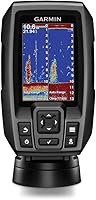
The Garmin Striker 4 includes CHIRP sonar and a built-in flasher view for watching sonar data in a classic format. That flasher mode can suit ice fishing or vertical jigging.
Can a fish finder show depth and underwater structure?
Yes. A fish finder can show water depth and changes in the bottom, such as slopes or other structure.
These clues can help you identify areas worth checking.
Scanning sonar can add detail about objects, structure, and fish around a boat. The Garmin Striker Vivid 4cv includes CHIRP traditional sonar and CHIRP ClearVü scanning sonar, plus color palettes intended to help distinguish fish from structure.
Bottom readings are information to interpret, not a full map of every feature. Conditions and the transducer's view affect what appears on screen.
For a clearer comparison of the terms, see fish finder or depth finder. A depth finder focuses on depth, while many fish finders add sonar views and other fishing tools.
Can you use a fish finder to mark fishing spots?
Some fish finders let you save a location as a waypoint so you can find it again. This is useful when you discover a brush pile, dock, stump, or other productive spot.
The Garmin Striker 4 has a waypoint map for viewing, marking, and navigating to locations. The Striker Vivid 4cv has GPS for marking waypoints and creating routes.
A castable unit can suit a different kind of trip. The Deeper PRO+ 2 has built-in GPS and can create bathymetric maps from shore, a dock, or a bank, saving maps to the Fish Deeper app.
What else can a fish finder do?
A fish finder may include features for navigation, mapping, or vertical fishing, depending on the model. Check which functions matter for the way you fish.
GPS can help mark locations and create routes. Some models also show boat speed or let you create maps; those features are separate from sonar's depth and target readings.
A built-in flasher is useful for viewing sonar returns in a format suited to vertical jigging or ice fishing. If you want to compare setups, explore fish finders for ice fishing and portable fish finders for kayaks.
What can't a fish finder tell you?
A fish finder can't guarantee that a target is a fish or that fish will bite. It shows sonar information that you interpret alongside your knowledge of the water and fishing conditions.
It also doesn't replace local knowledge, safe boating practices, or a map suited to navigation. Read the manufacturer's instructions for mounting and using the transducer, and follow boating rules for your area.
What is a fish finder used for when choosing gear?
A fish finder is used to help you understand what's below the water and save useful locations. Pick a unit based on where you fish and which views or mapping features you'll use.
For basic sonar with waypoint marking, the Striker 4 combines CHIRP sonar and a waypoint map. For color scanning sonar and GPS, the Striker Vivid 4cv adds CHIRP ClearVü and route creation.
For shore, dock, or bank mapping, the Deeper PRO+ 2 is castable and has built-in GPS.
Start with how fish finders work if you want to understand what sonar can show before comparing models. Then choose the setup that fits your fishing location and how you plan to read the screen.
Frequently asked questions
What is a fish finder mainly used for?
A fish finder mainly uses sonar to show water depth, fish targets, and underwater features such as bottom contours or structure. Anglers use that information to choose where to fish, adjust their depth, and mark locations for a return trip.
The screen is a sonar view, not a guarantee that a target is a fish.
Can a fish finder show the bottom?
Yes. A fish finder displays a sonar return from the bottom, which can help you judge depth and notice changes in bottom shape or hardness.
The amount of detail depends on the sonar and conditions.
Learn how to read the screen before treating a line or shape as a specific object.
Does a fish finder tell you where fish are?
It can show returns that may be fish, but it doesn't identify a species or guarantee a catch. Sonar views are easier to interpret when you consider depth, bottom structure, and whether targets move as the boat moves.
Use the display as information for choosing where to cast or jig.
Can you use a fish finder from shore?
Some castable fish finders are designed to work from shore or a dock. For example, the Deeper PRO+ 2 has built-in GPS for creating bathymetric maps from shore, a dock, or a bank.
A boat-mounted unit with a transducer is intended for a different setup.