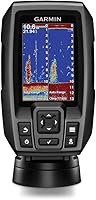
Best Easy-to-Use Fish Finders for Beginners
The Garmin Striker Vivid 5cv is the easiest fish finder for beginners overall, because its 5-inch color screen, high-sensitivity GPS and included transducer keep the first trip simple. The Humminbird PiranhaMAX 4 is the simplest no-GPS option, and the Garmin Striker Cast is the easy pick for shore and dock fishing.
On this page (8 sections)
- What makes a fish finder easy for beginners?
- How we compared these beginner units
- Garmin Striker Vivid 5cv: the best pick for most beginners
- Humminbird PiranhaMAX 4: the simplest no-GPS option
- Garmin Striker Cast: the best for shore and dock fishing
- Which beginner fish finder fits your fishing?
- Beginner settings that keep the screen readable
- The beginner fish finder decision, in one rule
The easiest fish finder for beginners is one you can mount or cast, power up and read without a manual in your hand. The Garmin Striker Vivid 5cv is the best pick for most new boat owners, because its 5-inch color screen, high-sensitivity GPS and included transducer cover the first year without extra parts.
The Humminbird PiranhaMAX 4 wins when you want a plain screen and no GPS to learn. The Garmin Striker Cast is the easy choice if you fish from shore or a dock instead of a boat.
This guide walks through what makes each one simple to use and who each model suits. If you want the full shortlist behind this decision, our roundup of the best fish finders for beginners covers more models.
What makes a fish finder easy for beginners?
Fewer setup steps and a clear screen matter more than extra modes. The easiest fish finder for beginners is one you can mount or cast, power up and read without a manual in your hand.
A beginner who spends the first trip fiddling with settings catches fewer fish than one who leaves the defaults alone. Screen size and contrast come first, because a 4.3-inch to 5-inch color screen shows depth, fish and structure without squinting, and color palettes help separate a fish from a rock or weed bed.
Then look at what's in the box. A unit that includes its transducer and mount saves you a separate purchase and a separate install, which is where most new buyers get stuck.
Mounting and power are the next filter. A boat unit needs a display mount, a transducer cable and a 12 V supply, while a castable unit needs a charged battery and a phone.
Controls should match how you fish. A dial and a few buttons are easier to learn than nested menus, and a tilt-and-swivel mount lets you angle the screen without tools.
Finally, think about where you fish. A fish finder for river fishing has to handle shallow, moving water and frequent transducer contact with the bottom.
A lake or bay angler can get away with a simpler unit, and our deeper comparison in which fish finder is easiest to use covers these trade-offs model by model.
How we compared these beginner units
We are the Sweet Flies research team, and we have not tested these units on the water. Every claim below comes from the maker's published features and specs.
Our score weighs specs, features and buyer feedback against what you're shopping for. For beginners, that means screen clarity, included parts, mounting simplicity and how much the unit asks you to learn before it shows you fish.
We favored units that ship with a transducer and a mount, because a beginner shouldn't have to research transducer compatibility before the first trip. We also weighed GPS, which adds a setup step and a menu to learn but marks spots so you can return to them, a real beginner need on a new lake.
And we looked at where each unit works. A boat unit and a castable sonar solve different problems, so we judged each against the fishing it's built for.
One note on the two 8.3 scores: the Garmin Striker Vivid 5cv edges ahead because its color screen and GPS do more for a first-time boat owner, while the Humminbird PiranhaMAX 4 earns its score by doing the basics with fewer settings. Read the full method on our best fish finder for beginners page.
Garmin Striker Vivid 5cv: the best pick for most beginners
The Garmin Striker Vivid 5cv is the best beginner fish finder for a small boat, because it combines an easy 5-inch color screen with GPS and a transducer in the box. Garmin calls it an easy-to-use 5-inch color fishfinder, and the included mount and cabling back that up.
The screen is the first reason it suits a beginner. Vivid scanning sonar color palettes make it easier to tell fish from structure, so you spend less time guessing at gray blobs, and the 5-inch LCD gives you enough room for depth, sonar and a map view without crowding.
Garmin supports CHIRP traditional sonar and CHIRP ClearVü scanning sonar on this unit. Both run through a compatible transducer, and the included GT20-TM covers that.
ClearVü gives you a picture of what's directly below the boat, which helps when you're learning to read bottom structure.
High-sensitivity GPS is the feature that sets it apart here. It lets you mark waypoints, create routes and view your boat's speed, and for a beginner, marking the spot where you hooked a fish is worth more than any extra sonar mode.
Built-in Quickdraw Contours mapping lets you build your own maps with 1-foot contours as you move. You don't need a map card to start, and the map you make is specific to your water.
The kit includes the fishfinder, GT20-TM transducer, power/data cable, tilt/swivel mount and hardware, which is a complete first install. Garmin backs it with a 2-year limited warranty.
Pick the Striker Vivid 5cv if you fish from a boat and want GPS from day one. Skip it if you fish from shore or want the fewest possible settings.
If GPS is your main draw, our guide to the easiest to use fish finder with GPS compares units that put location tools first.
What to know before you mount it
Plan the transducer location before you drill. A transom-mount transducer needs clean water with no turbulence from the prop, and the cable has to reach the display without a sharp bend.
Set the tilt/swivel mount where you can see the screen from the helm or tiller. You want to glance at depth without turning your whole body.
Then leave the defaults alone for the first trip. Turn on fish icons and depth numbers, pick a color palette you can read in sun, and learn what the bottom looks like at your usual spot.
Humminbird PiranhaMAX 4: the simplest no-GPS option
The Humminbird PiranhaMAX 4 is the easiest fish finder for beginners who want a plain screen and no GPS, because its 4.3-inch color LCD and redesigned interface keep the controls to fish alarms, depth alarms and zoom. Humminbird says the interface was redesigned to be even easier to use.
Dual beam sonar is the feature that does the most work here. You choose a narrow beam for detail or a wide beam for coverage, which helps you identify fish, structure and contours.
A beginner can start wide to see more water, then narrow in on a spot.
The tilt and swivel mount lets you adjust the viewing angle quickly. That matters on a small boat where the screen sits close to your hands.
The kit includes the PiranhaMAX 4, the tilt and swivel mount and an XNT 9 28 T transom-mount transducer. It's a complete boat setup without GPS or mapping to learn.
The maximum measuring depth is 600 feet. That's far more than most beginners will fish, and it means the unit won't run out of range in a deep lake.
Humminbird covers it with a 1-year limited warranty. That's shorter than Garmin's 2-year term, so weigh it if you plan to keep the unit for years.
Pick the PiranhaMAX 4 if you want the fewest settings and don't need to mark spots electronically. Skip it if GPS and mapping are on your list.
For a full comparison of units with and without location tools, see which fish finder is easiest to use.
How the dual beam helps a beginner
A wide beam shows more of the water under the boat, which helps you find structure instead of driving past it. A narrow beam gives sharper detail when you want to look closely at a drop-off or a brush pile.
Start wide on a new lake. Once you see fish or structure, switch to narrow and slow down to confirm what's there.
That two-step habit is easier to learn than reading a single crowded screen.
Garmin Striker Cast: the best for shore and dock fishing
The Garmin Striker Cast is the easiest fish finder for beginners who fish from shore, a dock or a kayak, because you cast it, reel it in and read the sonar on your phone. There's no display to mount and no cable to run.
Setup is the quickest of the three. Download the free Striker Cast app, pair your mobile device and start fishing.
Garmin says you can be fishing in minutes, and the process is the same each time you go out.
The sonar streams wirelessly from up to 200 feet away. That's enough line to cast from shore, a dock or a kayak and still see the screen in your hand, and it works in freshwater and saltwater.
Two sonar modes keep it beginner-friendly. Traditional 2-D sonar shows a familiar picture of the bottom and fish, while ice fishing flasher mode gives you a live vertical view.
Garmin says it performs well in both shallow and deep water.
Battery life is rated at 10+ hours on the internal USB-rechargeable battery, though Garmin notes it varies with use. It powers on when it floats in water and turns off when you remove it, so you won't drain it between trips.
You can download maps with 1-foot contours from the Garmin Quickdraw Community. That gives you a starting map for some waters without building one yourself.
The kit includes the Striker Cast, a carrying bag, a 20-foot tether and a USB charging cable. Garmin backs it with a 2-year limited warranty.
Pick the Striker Cast if you fish without a boat or want a second unit for scouting. Skip it if you prefer a fixed screen you can read without your phone.
For boat-mounted units with a display and GPS built in, compare the best fish finders for beginners.
Casting and reading the Striker Cast
Use the included 20-foot tether on the first few casts so you don't lose the unit if the line breaks. Cast beyond the spot you want to check, then reel slowly back through it.
Watch the screen as it comes toward you. Fish show as marks between the surface and the bottom line, and the depth number tells you how deep the water is at that point.
Keep your phone in a safe spot on shore or in the boat. The app needs to stay within the 200-foot wireless range, so don't walk away while the sonar is in the water.
Which beginner fish finder fits your fishing?
Start with the Garmin Striker Vivid 5cv if you fish from a boat and want GPS and mapping. It's the most complete first unit here, with a color screen, waypoints, routes and Quickdraw Contours in one box.
Pick the Humminbird PiranhaMAX 4 if you want the simplest possible boat unit. Its dual beam sonar and basic controls suit an angler who just wants to see depth and fish without learning a menu system.
Choose the Garmin Striker Cast if you don't have a boat or you fish from shore and docks. It's also the easy second unit for scouting new water from the bank before you launch.
Use the table below to compare the three on the facts that matter to a beginner.
| Product | Best for | Our score |
|---|---|---|
| Garmin Striker Vivid 5cv | most beginners | 8.3 |
| Humminbird PiranhaMAX 4 | simple no-GPS unit | 8.3 |
| Garmin Striker Cast | shore and dock fishing | 7.8 |
Matching a unit to your boat and water
A transom-mount unit like the Striker Vivid 5cv or PiranhaMAX 4 needs a hull to mount on. A castable unit like the Striker Cast works from anywhere you can cast.
If you fish a river with a shallow draft, a unit that reads well in moving water and holds bottom contact matters more than mapping. Our river fishing fish finder guide covers that choice in detail.
If you plan to fish ice season, the Striker Cast's flasher mode gives you a live view through a hole. For a full set of hard-water options, see the best fish finders for beginners.
Beginner settings that keep the screen readable
Leave every unit on its default settings for the first two or three trips. The makers set those defaults for a general picture, and they're a better starting point than guessing at gain and range.
Turn on fish icons and depth numbers. Fish icons mark what the unit thinks is a fish, and depth numbers give you a number to read instead of estimating from the screen.
Pick a color palette you can read in bright sun. The Striker Vivid 5cv's vivid palettes exist for this, and you can switch back to a plain view if the colors distract you.
Adjust gain only when the screen looks empty or noisy. Gain controls how sensitive the sonar is, and too much of it fills the screen with clutter.
Set the range to a little more than the depth you expect, because a range set too deep squeezes your target into the top of the screen.
Leave GPS and mapping alone until you've read fish. Marking spots is more useful once you know which spots produce.
If the picture still confuses you, our easiest to use fish finder with GPS guide covers how location features change the screen layout. And for a simpler read on which unit to buy, see which fish finder is easiest to use.
The beginner fish finder decision, in one rule
Pick the Garmin Striker Vivid 5cv for most boat fishing, because GPS and mapping make it the most useful first unit. The easiest fish finder for beginners is the one you'll actually read on the water, and a marked spot you can return to is the feature that pays off fastest.
Pick the Humminbird PiranhaMAX 4 if you want the fewest settings and no GPS. Its dual beam sonar and simple controls do the basics well.
Pick the Garmin Striker Cast if you fish from shore, a dock or a kayak. It's the only one here that needs no boat at all.
If you're still weighing boat units, our roundup of the best fish finders for beginners lists more models by score. For location tools specifically, see the easiest to use fish finder with GPS.
Frequently asked questions
What is the easiest fish finder for beginners to set up?
The Garmin Striker Cast is the quickest to set up: download the app, pair your phone, cast it in the water and start reading. A boat unit like the Garmin Striker Vivid 5cv takes more work because you mount the display and run the transducer cable.
Do beginners need GPS in a fish finder?
GPS is worth having if you plan to mark spots and return to them, which is what the Garmin Striker Vivid 5cv does. A unit without GPS, like the Humminbird PiranhaMAX 4, keeps the screen and controls simpler, but you mark spots with landmarks instead.
Can a beginner fish finder work from shore?
Yes. The Garmin Striker Cast is built for it: you cast it from shore or a dock, reel it back in and read the sonar on your phone.
The other two models here are made for mounting on a boat, so they suit anglers fishing from a hull.
How much depth does a beginner fish finder show?
The Humminbird PiranhaMAX 4 has a maximum measuring depth of 600 feet. The Garmin units support their own depth ranges through their transducers, and you'll do most beginner fishing well inside the shallow end.
How do I read a fish finder screen as a beginner?
Start with fish icons and depth numbers turned on so the screen tells you what it sees. Leave the color palettes and sonar modes at their default settings for the first few trips, then adjust gain or range only when the picture looks unclear.