8 Best Fish Finders for Beginners (October 2026)
The best beginner fish finders include the Garmin Striker 4 for simple boat use, the Garmin Striker Vivid 4cv for color sonar views, and the Garmin Striker 4 Portable Kit for portable boat trips.
On this page (8 sections)
- How we chose beginner fish finders
- Compare the best fish finders for beginners
- Best fish finders for first-time owners
- What should a beginner look for in a fish finder?
- Is a mounted or castable fish finder easier to start with?
- Does a beginner need GPS on a fish finder?
- How do you learn to read your first fish finder?
- The best beginner fish finder depends on where you fish
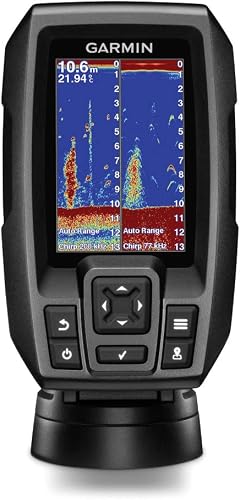
The Garmin Striker 4 is the best fish finder for beginners who want a simple boat-mounted unit. Its dedicated buttons, CHIRP sonar and waypoint map give you useful basics without starting with a large set of controls.
Choose the Striker Vivid 4cv if color sonar views and GPS mapping matter more. For fishing from shore or moving between boats, the Striker 4 Portable Kit and castable models avoid a permanent display installation.
A first unit should match where you fish and how you want to see sonar. Our guide to types of fish finders explains the main formats, and which fish finder is easiest to use compares the control styles.
Our picks at a glance
-
1
-
2

-
3

How we chose beginner fish finders
The best fish finder for beginners should make common tasks clear: starting sonar, reading the screen, and marking a place you may want to revisit. We compared control style, sonar modes, display format, portability and mapping features.
A button-based mounted unit is a familiar starting point for a small boat. A castable sonar trades a dedicated screen for a phone or tablet, while a portable kit keeps the display and transducer together for trips where a fixed installation is inconvenient.
We gave more weight to simple controls and clear setup options than to advanced features. Our score weighs specs and features against what a first-time buyer is likely to need.
Compare the best fish finders for beginners
The table highlights the main difference among these 8 choices: fixed display, portable kit or app-based sonar. Check the display and mounting style first, then decide whether GPS, mapping or automatic settings matter for your fishing.
| Product | Best for | Display | Sonar | Mapping | Our score |
|---|---|---|---|---|---|
| Garmin Striker 4 | simple boat use | 3.5 in | CHIRP and ClearVü | Waypoint map | 9.1 |
| Garmin Striker Vivid 4cv | color sonar views | 4 in color | CHIRP and CHIRP ClearVü | GPS and Quickdraw Contours | 9.0 |
| Garmin Striker 4 Portable Kit | portable boat trips | 3.5 in | CHIRP sonar | 8.7 | |
| Deeper PRO+ 2 | app-based portable sonar | Built-in GPS and app maps | 8.5 | ||
| Humminbird PiranhaMAX 4 | a larger basic screen | 4.3 in color LCD | Dual Beam Sonar | 8.3 | |
| Garmin Striker Cast with GPS | castable sonar with mapping | Built-in GPS and Quickdraw Contours | 8.1 | ||
| Garmin Striker Cast | basic castable sonar | 7.8 | |||
| Lowrance Eagle 4x | automatic sonar setup | 4 in IPS portrait | 200 kHz Bullet Skimmer | 7.6 |
Best fish finders for first-time owners
The Garmin Striker 4 leads this group for direct controls and useful entry-level tools. The other picks fit different preferences, including a color screen, a portable kit, app-based sonar and automatic tuning.
Garmin Striker 4: Best for simple boat use
- 3.5-inch display
- Keyed interface with dedicated buttons
- CHIRP sonar
- Waypoint map
Dedicated buttons keep common controls easy to find, while CHIRP sonar and a waypoint map add useful tools for a first boat unit.
Pros
- Dedicated buttons
- CHIRP sonar
- Waypoint map
Cons
- Small 3.5-inch display
- Wired transducer installation
The Garmin Striker 4 is a strong first choice if you want buttons instead of a touchscreen. Its keyed interface uses dedicated controls, and the unit includes a transducer, power and data cable, and tilt/swivel mount.
CHIRP sonar sends a sweep of frequencies to create clearer fish arches and better target separation. ClearVü scanning sonar adds views of structure and objects around the boat, while the waypoint map lets you mark places such as docks, stumps and brush piles.
The display measures 3.5 inches diagonally, so keep expectations realistic if you prefer a larger view. Its built-in flasher mode also gives the unit another use for vertical jigging or ice fishing.
Choose it if you want a compact mounted unit with GPS waypoints and simple controls. For a screen with color palettes and Quickdraw Contours, compare it with the Striker Vivid 4cv versus Striker Plus 4 guide.
Garmin Striker Vivid 4cv: Best for color sonar views
- 4-inch color display
- CHIRP traditional sonar
- CHIRP ClearVü
- Built-in GPS and Quickdraw Contours
A 4-inch color screen and two sonar views give beginners more visual detail, with GPS waypoints and Quickdraw Contours for marking and mapping.
Pros
- Color palettes for fish and structure
- GPS waypoint and route tools
- Built-in Quickdraw Contours
Cons
- Requires a mounted display and transducer
- More features to learn than a basic unit
The Striker Vivid 4cv is a good fit if color contrast would help you separate fish and structure on screen. Its 4-inch display offers vivid scanning sonar palettes, and the included GT20 transducer supports CHIRP traditional sonar and CHIRP ClearVü.
High-sensitivity GPS lets you mark waypoints, create routes and view boat speed. Built-in Quickdraw Contours can create and save maps with 1-foot contours, which adds a mapping step for anglers who return to the same water.
The bail mount tilts and swivels, and the box includes transom and trolling motor mounting hardware. This is still a mounted fish finder with a wired transducer, so plan the installation before choosing it.
Pick it when you want more visual detail and mapping tools than the basic Striker 4 provides. See our fish finders with GPS guide if waypoint and mapping features are the main reason you are upgrading.
Garmin Striker 4 Portable Kit: Best for portable boat trips
- 3.5-inch display
- Portable kit with rechargeable battery
- CHIRP sonar
- Waypoint map
The portable kit adds a rechargeable battery, bag and foam float to the Striker 4 setup, making it a practical choice when you move the unit between trips or boats.
Pros
- Portable kit includes a battery and bag
- Dedicated-button interface
- Built-in flasher mode
Cons
- Small display
- Still needs the transducer positioned for use
The Striker 4 Portable Kit suits anglers who want the basic Striker controls but need a self-contained kit for trips. It includes a rechargeable battery, bag, foam float, transducer and mounting parts.
The display and sonar features match the simple approach of the Striker 4: dedicated buttons, CHIRP sonar, a waypoint map and a built-in flasher mode. The kit also includes a kayak in-hull transducer mount, which can help when setting up for kayak use.
Portability does not remove the need to place the transducer correctly or charge the battery before a trip. If you fish from a small aluminum boat, our 14-foot aluminum boat fish finder guide covers fit and mounting considerations.
Choose this kit if you move your electronics between boats or want a portable setup. If you want to fish without a separate display, a castable unit may fit better.
Deeper PRO+ 2: Best for app-based portable sonar

- Wireless castable sonar
- Three beam options
- Built-in GPS
- Maps saved in Fish Deeper app
This castable unit sends sonar to a mobile device and uses built-in GPS to create bathymetric maps from shore, a dock or a bank.
Pros
- No fixed display mount
- Three beam choices
- Built-in GPS mapping
Cons
- Depends on a compatible mobile device
- App-based viewing takes a different setup
The Deeper PRO+ 2 is the most flexible choice here for shore, dock and bank fishing. Its wireless sonar pairs with a mobile device, and built-in GPS can create bathymetric maps saved in the Fish Deeper app.
Three beam choices let you use a wide view to cover more water or a narrow view to focus on a smaller area. The unit is designed to work with kayaks, boats and ice fishing, but the viewing screen is your compatible phone or tablet.
That app-based setup feels different from a dedicated fish finder display. Make sure you are comfortable checking sonar on your mobile device before choosing a castable design.
Choose the Deeper when portability and map creation matter more than having a permanently mounted screen. Read our portable fish finders for kayaks guide for more on mobile sonar formats.
Humminbird PiranhaMAX 4: Best for a larger basic screen

- 4.3-inch color LCD
- Dual Beam Sonar
- Tilt and swivel mount
- Fish ID+, alarms and zoom
Its 4.3-inch color screen is larger than the other fixed-display choices here, and Dual Beam Sonar lets you choose between detail and broader coverage.
Pros
- Largest fixed display in this group
- Narrow and wide beam choices
- Simple fish ID and zoom features
Cons
- No GPS waypoint mapping listed
- Wired transducer installation
The PiranhaMAX 4 is a useful pick if you want a larger basic color display. Its 4.3-inch LCD is the largest fixed display among these beginner choices, and the tilt-and-swivel mount lets you angle it toward your seat.
Dual Beam Sonar offers a narrow beam for more detail or a wide beam for broader coverage. Fish ID+, fish and depth alarms, and zoom are included for anglers who prefer a simple set of tools.
It comes with a transom-mount transducer, so installation still takes planning. The features do not include GPS waypoint mapping, which makes it less suited to anglers who want to save and revisit specific locations.
Choose it for a straightforward display with beam options and basic alarms. For a direct comparison with a similarly sized Garmin, see Humminbird Helix 5 versus Helix 7.
Garmin Striker Cast with GPS: Best for castable sonar with mapping

- Wireless sonar to phone or tablet
- Built-in GPS
- Custom maps with 1-foot contours
- Traditional and flasher modes
The Cast with GPS pairs with a phone or tablet and adds built-in GPS for making custom maps, which suits shore anglers who want location records without a fixed display.
Pros
- Works with Apple or Android devices
- Built-in GPS mapping
- Quick setup through the app
Cons
- Requires a compatible phone or tablet
- Sonar is viewed on a mobile screen
The Striker Cast with GPS fits beginners who want castable sonar plus mapping. Pair it with the free app on a compatible Apple or Android phone, cast it from shore or a boat, and view sonar wirelessly on the mobile screen.
Built-in GPS supports custom fishing maps with 1-foot contours through Quickdraw Contours. The app also offers traditional 2-D and ice-flasher modes, and Garmin states that battery life is 10 or more hours, depending on use.
A phone becomes part of the fishing setup, so consider screen visibility, battery charge and how you will secure the device. The castable format also differs from a transducer mounted on a boat.
Pick this model if you want to keep location maps while fishing without installing a fixed display. If mapping is not needed, the basic Garmin Striker Cast may be a closer match.
Garmin Striker Cast: Best for basic castable sonar

- Wireless sonar to phone or tablet
- Traditional 2-D and ice flasher modes
- Battery life of 10+ hours stated by Garmin
This castable model sends sonar to a mobile device and offers traditional and ice-flasher views, without the built-in GPS mapping feature of the GPS version.
Pros
- No permanent display mount
- App setup is straightforward
- Rechargeable internal battery
Cons
- Requires a compatible phone or tablet
- No built-in GPS
The standard Striker Cast suits a beginner who wants wireless sonar without built-in GPS. It pairs with a phone or tablet, then streams traditional 2-D or ice-flasher sonar from up to 200 feet away.
Garmin says its internal rechargeable battery lasts more than 10 hours, though actual battery life varies with use. The unit turns on when floating and powers down when removed from the water, which reduces the number of steps before and after a session.
This model can access maps with 1-foot contours from the Garmin Quickdraw Community, but it does not include built-in GPS for creating custom maps. Choose the GPS version if recording your own locations is important.
The app-based screen is the main tradeoff. If you would rather keep a display mounted on the boat, choose a fixed unit such as the Striker 4.
Lowrance Eagle 4x: Best for automatic sonar setup

- 4-inch IPS portrait screen
- Auto-Tuning Sonar
- 44-degree Bullet Skimmer beam
- Fish icons with depth and zoom
Auto-Tuning Sonar reduces manual adjustment, while the portrait screen and included transducer suit a small boat or kayak installation.
Pros
- Auto-Tuning Sonar
- Wide 44-degree beam
- Screen designed for bright light and polarized sunglasses
Cons
- No GPS listed
- Does not include an audible fish alarm
The Lowrance Eagle 4x is aimed at new owners who want less manual sonar adjustment. Auto-Tuning Sonar automatically provides optimized settings, and its 4-inch IPS portrait screen is designed for bright sunlight and polarized sunglasses.
The included 200 kHz Bullet Skimmer has a 44-degree beam for coverage below the boat. Fish icons show depth, and zoom gives you a closer look without an audible fish alarm.
Its compact portrait layout is intended for limited spaces, including small boats and kayaks. The features here do not include GPS mapping, so choose a different model if marking spots is part of your plan.
Pick it when automatic settings and a readable compact screen matter most. To compare mounted choices by boat style, start with our guide to fish finders for a 14-foot aluminum boat.
What should a beginner look for in a fish finder?
A beginner should choose a fish finder with controls and a screen format they will use comfortably. For a first boat unit, prioritize simple operation, a suitable transducer and a display you can read from your fishing position.
Dedicated buttons make common settings easy to locate, while Auto-Tuning Sonar can reduce manual adjustment. A castable model keeps installation light, but it relies on a phone or tablet for viewing.
GPS is useful when you want to save locations or create maps. If you mostly want to see depth and sonar returns, a model without mapping may be enough.
Is a mounted or castable fish finder easier to start with?
A mounted fish finder is often easier to read while you operate the boat because its screen stays in place. It requires installing a display and transducer, and you should check that the mounting location gives you a clear view.
A castable fish finder avoids a fixed display installation and can work from shore or a dock. It sends sonar to an app, so you need a compatible phone or tablet and a way to keep that screen accessible.
For a portable display setup, the Garmin Striker 4 Portable Kit sits between those options. It keeps the dedicated screen while adding a battery and carrying case.
Does a beginner need GPS on a fish finder?
You need GPS if you want to mark locations, make routes or build maps, but it is not required to view sonar. The Striker 4 includes a waypoint map, and the Vivid 4cv adds built-in Quickdraw Contours mapping.
Castable options vary: the Striker Cast with GPS and Deeper PRO+ 2 have mapping features, while the standard Striker Cast does not have built-in GPS. Compare GPS fish finder options if marking spots is a priority.
How do you learn to read your first fish finder?
Start with depth and the bottom line, then learn how sonar returns appear as the boat moves. Change one setting at a time so you can see how it affects the screen.
Fish symbols can help identify returns, but learning the basic display gives you more context than relying on icons alone. Our fish finder screen guide explains the display step by step.
The best beginner fish finder depends on where you fish
Choose the Garmin Striker 4 if you want a simple mounted display with buttons, CHIRP sonar and waypoints. Choose the Vivid 4cv for color sonar and mapping, or the portable kit if you move your equipment between trips.
For shore use, pick a castable model that matches your need for GPS and maps. If you prefer automatic sonar adjustment, consider the Lowrance Eagle 4x and its Auto-Tuning feature.
Our top 3 picks at a glance
-
1
-
2
-
3
Frequently asked questions
What is the easiest fish finder for a beginner?
The Garmin Striker 4 is a straightforward starting point because it uses dedicated buttons and includes CHIRP sonar and a waypoint map. If you want automatic sonar adjustment, consider the Lowrance Eagle 4x, which has Auto-Tuning Sonar.
Choose based on whether you prefer direct controls or more automatic setup.
Should a first fish finder have GPS?
GPS helps you mark locations and return to them, so it is useful if you fish the same waters often. The Garmin Striker 4 and Striker Vivid 4cv have waypoint tools, while the Striker Cast with GPS and Deeper PRO+ 2 add mapping features.
A basic unit can still show sonar without GPS.
Can I use a fish finder without installing it on a boat?
Yes. Castable sonar such as the Garmin Striker Cast and Deeper PRO+ 2 sends sonar to a phone or tablet, so you can use it from shore or a dock.
For a portable screen and transducer kit, the Garmin Striker 4 Portable Kit includes a rechargeable battery and carrying bag.
What should a beginner learn first on a fish finder?
Start by recognizing the depth reading, bottom line and sonar returns, then adjust sensitivity only when the view is hard to read. Use waypoint tools to mark places you want to revisit.
Our guide to reading a fish finder screen explains the display basics.