9 Best Fish Finders for Striper Fishing (November 2026)
The best fish finders for striper fishing include the FishPRO 2026 Upgrade for night and low-light striper runs, the Dovesun Fish Finder Rig with Float for surf and live-bait striper fishing, and the TMACTIME 1080P HD for kayak and small-boat striper trips.
On this page (10 sections)
- The best fish finders for striper fishing at a glance
- How we compared these striper fish finders
- Which fish finder shows stripers best at night?
- Do you need side imaging for stripers?
- Which fish finder fits a kayak or small boat?
- What about fishing for stripers from the beach or pier?
- Which screen size and display type should you choose?
- How much battery time do you need on the water?
- How should you rig and mount a fish finder for stripers?
- The verdict: which fish finder should you buy for stripers?
The best fish finder for striper fishing is the FishPRO 2026 Upgrade for most anglers. Its 7-inch IPS screen stays readable from any seat angle, and the IR and LED modes keep bait and stripers visible when the light drops.
Stripers feed at dawn, dusk and through the night in many lakes and bays. The unit you buy should show you where the bait is and how fish react to it, not just draw arches on a small screen.
That is why this list leans on three tools: camera units for seeing the strike, sonar and GPS for covering water, and a surf rig for anglers fishing from the beach. Each pick below earns its place for a specific striper situation.
Our score weighs specs, features and buyer feedback against what you're shopping for.
Our picks at a glance
-
1

-
2
 Best for surf and live-bait striper fishing
Dovesun Fish Finder Rig with Float
9.6/10 our score
See it on Amazon -
3
- 4
 Best for shore, dock and pier striper fishingCheck it
- 5
 Check it
Humminbird Helix 5 CHIRP GPS G3
Best for mapping striper water - 6
 Check it
Humminbird Helix 7 G4 MEGA Side Imaging
Best for wide open striper flats - 7
 Best for bank and kayak scoutingCheck it
- 8
 Check it
BEYOTTER Underwater Fishing Camera
Best for checking deep structure - 9
 Best budget castable sonarCheck it
The best fish finders for striper fishing at a glance
The FishPRO camera wins for most striper trips, while the Humminbird units cover open water faster and the castable models suit shore and kayak anglers. Pick the tool that matches how you fish before you compare screen sizes.
| Product | Best for | Max depth | Display | Power | Our score |
|---|---|---|---|---|---|
| FishPRO 2026 Upgrade | night and low-light striper runs | 82 ft | 7-inch IPS | 10,000mAh Li-battery | 9.6 |
| Dovesun Fish Finder Rig with Float | surf and live-bait striper fishing | 9.6 | |||
| TMACTIME 1080P HD | kayak and small-boat striper trips | 15 m | 4.3-inch LCD | 5,000mAh battery | 9.4 |
| ReelSonar iBobber | shore, dock and pier striper fishing | 135 ft | Rechargeable, 10+ hours | 9.1 | |
| Humminbird Helix 5 CHIRP GPS G3 | mapping striper water | 5-inch color TFT | 8.8 | ||
| Humminbird Helix 7 G4 MEGA Side Imaging | wide open striper flats | 125 ft | 7-inch color TFT | 8.6 | |
| Deeper PRO+ 2 | bank and kayak scouting | 100 m | 8.5 | ||
| BEYOTTER Underwater Fishing Camera | checking deep structure | 50 ft | 7-inch IPS | Rechargeable, up to 8 hours | 8.0 |
| Deeper Start | budget castable sonar | 50 m | 6 hours per charge | 7.2 |
How we compared these striper fish finders
We compared units by depth range, screen type and light modes, then checked how each one mounts and how long it runs on a charge. A striper angler often fishes in low light and moves between structure, so those factors got the most weight.
Camera units scored high when they showed fish reaction and held up in dark or stained water. Sonar units scored on coverage, mapping and target separation.
Castable models got credit for range from shore and app features, and the surf rig was judged on bait presentation and hook strength.
We did not test any unit on the water. The scores come from the specs each brand publishes and the jobs each design does well.
That means a 9.6 camera and a 9.6 surf rig score the same for different reasons, and the badge tells you which job each one fills.
One more split we kept in view: cameras and sonar answer different questions. A camera tells you whether the marks on a sonar screen are stripers or carp, and whether a fish followed your swimbait before turning away.
Sonar tells you how much water holds bait and where the bottom changes. A striper angler who only jigs a few brush piles learns more from a camera, while an angler who runs miles of bank needs sonar coverage first.
We also weighed how each unit handles a long day. Battery figures, charging ports and the ability to run while plugged in all affect whether a unit lasts from the dawn bite to the night bite.
A 20-hour camera and a 6-hour castable sonar serve different trips, so the score reflects the fit rather than raw runtime alone.
If this is your first unit, our guide to the best fish finders for beginners explains sonar basics in plain terms.
Which fish finder shows stripers best at night?
A camera unit with its own lights shows stripers best after dark. Sonar still marks fish in the dark, but only a camera with IR or LED lighting lets you see the bait and the strike.
The FishPRO leads here because it carries both light types. IR gives a black-and-white view that cuts through dark water, while LED shows full color.
A button on the monitor switches between them without touching cables. The 2026 monitor also shows which light mode is active, so you are not guessing in the dark.
Both modes are aimed at the same job: keeping the lens lit long enough to read how a striper approaches a live herring or a swimbait.
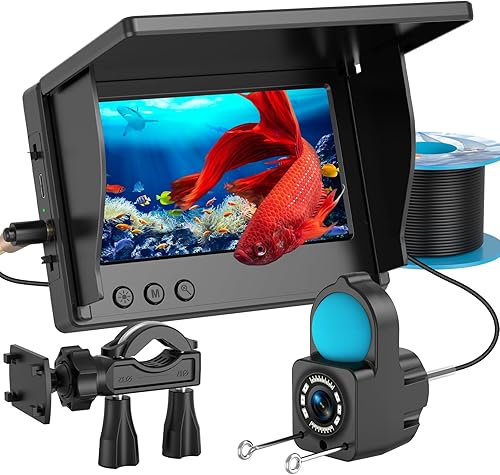
The TMACTIME runs six IR lights for night viewing and packs into a smaller screen for kayak trips. Six lights are enough to see structure and fish silhouettes close to the lens, though a wide dark lake will still fall off at the edges.
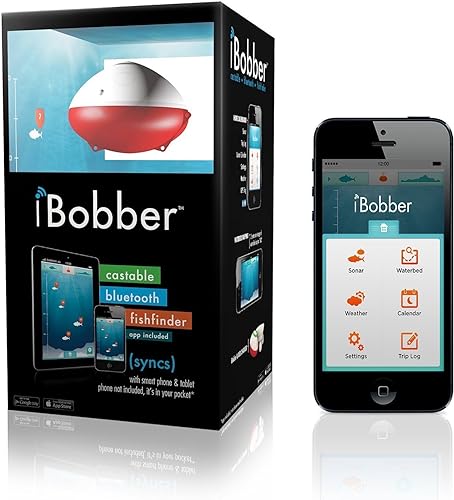
If you fish the beach after sunset, the ReelSonar iBobber has a fish alarm and a strike alert that let your phone do the watching. Its LED beacon makes the unit easier to spot on the water after dark.
For a dedicated cold-weather setup, our roundup of the best fish finders for ice fishing covers units built for the hole.
Camera units with lights
The FishPRO and TMACTIME both put a lit camera in the water. The FishPRO's 82 ft cable reaches deeper structure and its 10,000mAh battery runs up to 20 hours.
The TMACTIME's 15 m cable and 10-hour battery suit shorter sessions. The BEYOTTER carries 12 IR/LED lights and a 7-inch IPS screen with a sun visor, which makes it the brightest option for night viewing, though its depth limit is 50 ft.
Its anti-fog lens also helps when cold air meets warm water at the hole.
Sonar for dark water
Sonar does not need light, so a Humminbird unit still marks fish at midnight. Pair it with a chartplotter view to troll ledges in the dark.
The Helix 5 and Helix 7 both run the same Dual Spectrum CHIRP sonar, so the choice comes down to screen size and imaging rather than night performance. A wide CHIRP setting covers more water when you cannot see the bank, and a narrow setting holds detail on a single ledge.
Do you need side imaging for stripers?
Side imaging helps when you want to find striper schools beside the boat rather than straight below it. The Humminbird Helix 7 G4 scans 125 ft to each side and 125 ft down, so one pass covers 250 ft of water.
That matters on wide flats and long points where stripers herd bait along a contour. You spot the school on screen, then turn and cast to it.
Down imaging shows structure directly beneath the hull when you stop. The Helix 7 runs MEGA Side and MEGA Down Imaging plus Dual Spectrum CHIRP, so you get all three views on one screen.
MEGA imaging adds detail over standard imaging sonar, which helps separate a school of stripers from the bait ball they are pushing.
The catch is speed. Side imaging reads best at a steady, slow troll, so it rewards anglers who move deliberately.
If you mostly anchor and jig, a camera unit gives you more useful detail. The FishPRO and BEYOTTER both show you the fish and your bait together, which no arch view can do.
A camera also settles the question of whether the mark beside your jig is a striper or a sunken log.
When wide coverage pays
Choose side imaging for big open water, long points and trolling runs. It earns its keep when you cover miles of bank in a day.
The 7-inch display splits the side and down views without cramping either one. Set a waypoint when you cross a school so you can come back and cast once the boat is turned around.
When a camera is better
Choose a camera for anchored jigging, dock lights and night trips. Seeing the fish take the bait teaches you more than any arch.
The FishPRO's adjustable fin sets the lens at 45, 90 or 180 degrees so you can angle the view toward the structure you are fishing. Point it along a ledge and you can watch stripers slide up the drop while your bait hangs in the strike zone.
Which fish finder fits a kayak or small boat?
A compact camera kit or a castable sonar fits a kayak or small boat best. Both avoid a transom transducer and a permanent mount, so you can stow them between trips.
The TMACTIME is the easiest fit for a kayak. Its 4.3-inch screen, 15 m cable and 5,000mAh battery keep the kit light, and the IP68 housing is rated to 15 m with a 100 kg load capacity.
The ReelSonar iBobber is even smaller: it casts from the boat and syncs to your phone up to 100 ft away. At 2 inches square and 1 inch tall, it takes up less room than a tackle box tray.
The Deeper PRO+ 2 also casts from a kayak and adds built-in GPS for bathymetric maps. The narrow beam separates small targets down to 0.4 in, which helps when you jig for stripers over deep structure.
Its three beam widths let you cover water with the wide beam and then drill down with the narrow one. It saves every map to the Fish Deeper app, so the water you paddle today is charted for the next trip.
Castable sonar on a kayak
Cast the sonar, watch the app and paddle to the marks. The Deeper PRO+ 2 maps as you go, so each trip builds a picture of the water.
The Deeper Start does the same on a tighter budget with a single 40-degree beam. The Start's 165 ft cast range means you can reach deep water from a paddle stroke or two, and its night fishing mode covers early starts before the sun is up.
Camera on a kayak
Clip the monitor to a rail or set it on the deck and lower the camera. The TMACTIME's small screen leaves room for your paddle strokes.
The FishPRO's magnetic spool lets you keep the monitor on deck and the cable spool separate, which keeps the kayak cockpit tidy. The magnetic connection also means you can hand the spool over the side without unclipping the screen.
What about fishing for stripers from the beach or pier?
A castable sonar or a surf rig is the better buy when you fish from shore. Sonar finds the depth and the bait line, and the rig puts your bait where the stripers feed.
The Dovesun Fish Finder Rig is built for this. Its float holds cut bait off the bottom and lets it move with the current, which keeps crabs and shrimp from stealing it.
The 90 lb main line and circle hook suit the bigger fish that patrol the surf. Each rig measures 20.5 in and packs six pre-tied in the set, so you spend time fishing rather than tying.
The kit includes rolling barrel swivels, a snap swivel, a sinker slider and beads, so the hardware is already matched.
Pair it with the ReelSonar iBobber to read the beach. Cast the sonar first to find the drop-off, then cast the rig to the edge of it.
The iBobber's fish alarm tells you when fish gather under a dock or pier. The app also logs water temperature and depth, which helps you notice when a falling tide pushes bait off the flat.
If you fish rivers for stripers, the best fish finders for river fishing covers current-heavy setups.
Reading a new beach
Start with the sonar in the zone you plan to fish. Look for the drop-off where shallow water meets deep, because stripers often patrol that edge at dawn.
Note the depth on the app and cast the rig so the bait sits just off the bottom on the deep side. The fish icons on the app are color coded by size, so a big mark under the bait line is worth a second cast.
Rigging the surf setup
Add a 2-4 oz pyramid weight to the fish finder rig, attach the rig to your main line and load cut bait. Cast as far as you can, keep the line taut and set it in a beach spike.
The adjustable float plug lets you change the hook distance without cutting the line. Loosen the plug, slide the float to where you want it, then press it back in to lock the setting.
Which screen size and display type should you choose?
A 7-inch IPS screen is the best balance for striper fishing. It stays readable from an off-angle seat and shows split views without crowding.
Screen type matters as much as size. The FishPRO and BEYOTTER both use IPS panels, which keep color and contrast when you look from the side.
A cheaper TN panel can wash out when you view it from above. FishPRO calls this out directly, noting that budget TN panels lose the view at top-of-screen angles.
That matters when the monitor sits low on a console and you look down at it from a standing position.
Size comes down to your boat. A 4.3-inch screen like the TMACTIME's fits a kayak, while a 7-inch screen like the FishPRO's or the Helix 7's suits a console.
The Helix 5's 5-inch screen sits in between and keeps the unit compact. The FishPRO's flip-up screen cover doubles as a sunshade, and the BEYOTTER's monitor has a built-in sun visor, so both hold up in bright light.
A sunshade matters more than raw brightness when the sun is behind you and the glare hits the glass.
IPS versus TN panels
IPS holds its picture at wide angles. TN loses the view when you look from the top of the screen, which happens when a unit sits low on a console.
For a camera unit that you watch while jigging, the wide-angle view matters more than raw brightness. The FishPRO's 7-inch IPS monitor also flips up so you can angle the screen toward your seat instead of squinting from the side.
Picking a size for your boat
Measure the space where the unit will sit. Leave room for a sun visor and the cables behind it.
A 7-inch monitor measures about 7 in on each side, so check the console or rail space before you buy. The Helix 7's control head measures 10.54 in wide, so it needs more dash room than the Helix 5's compact body.
How much battery time do you need on the water?
Plan for at least 10 hours of runtime for a full striper day. Dawn and dusk trips often stretch longer than expected, and a camera unit with lights drains faster than a plain sonar.
The FishPRO leads with up to 20 hours from its 10,000mAh battery, and its USB-C port lets you fish while charging from a power bank. That covers a sunrise start and a night finish without a swap.
It also means you can run the LED light all night without cutting the trip short. Running the LED mode instead of IR uses more power, so the charge-while-fishing option is a real advantage on long nights.
The TMACTIME runs up to 10 hours on 5,000mAh. The BEYOTTER runs up to 8 hours.
The ReelSonar iBobber lists 10+ hours and the Deeper Start lists 6 hours, which suits a morning or evening session. The Deeper Start reaches full charge in about 2.5 hours.
The Deeper PRO+ 2 runs on its own battery and recharges by USB.
Charging on the boat
Bring a USB-C cable and a power bank for camera units. The FishPRO can run while it charges, so a long night trip stays covered.
The BEYOTTER and TMACTIME recharge the same way, so one power bank can top up either one. A 10,000mAh bank roughly doubles the TMACTIME's session time, though the FishPRO's larger built-in battery needs less help.
Sonar battery expectations
Castable sonar units last a session on a charge. Recharge them at the dock before the next trip.
The Deeper Start's 2.5-hour charge time means an overnight top-up is enough for a dawn start. The iBobber's 10+ hours covers a full beach session, and the app warns you as the battery drops so you are not caught short at the evening bite.
How should you rig and mount a fish finder for stripers?
Mount a sonar unit on the transom for trolling, or set a camera or castable unit on a rod holder for jigging. The mount should keep the screen facing you and the cable clear of the prop.
The Humminbird units ship with a transom-mount transducer and a gimbal bracket. The Helix 5 uses a transom mount, and the Helix 7 fits a gimbal or in-dash mount.
Keep the transducer below the hull line so it reads cleanly at speed. Both Humminbird units include the transducer, power cable and mounting hardware in the box.
The Helix 7's transducer is the MEGA Side Imaging model, so the side views depend on that mount being level and clear of the hull.
The FishPRO's magnetic spool lets you separate the monitor from the cable or clip them together. It also has standard ¼-20 mounts, so a tripod or a rail clamp works.
The BEYOTTER's winch lets you raise and lower the camera without handling the cable, which keeps your hands free when a fish hits. Set the winch at the height where the lens sees the bait and leave it there while you jig.
Transom mounting for sonar
Set the transducer level with the waterline and clear of the prop wash. A steady reading at speed is the goal.
The Helix 5's Low-Q transducer gives precise 2D target separation in both wide and narrow CHIRP modes. Run the wide mode when you are covering water and the narrow mode when you stop on a school and want to see individual fish.
Camera placement
Lower the camera near structure and keep the cable straight. The FishPRO's adjustable fin sets the lens angle at 45, 90 or 180 degrees.
Its 1.8 mm cable has an 88 lb tensile strength and a 2800D Aramid Fiber core, so it handles repeated lifts on ice and in current without kinking. The included 0.35 oz weights help the camera hang steady in moving water so the picture stays level.
The verdict: which fish finder should you buy for stripers?
Buy the FishPRO 2026 Upgrade if you want to see stripers react to your bait, day or night. Its 7-inch IPS screen, dual light modes and 20-hour battery make it the best fish finder for striper fishing for most boat and ice anglers.
Choose the Dovesun Fish Finder Rig if you fish the surf and want bait held off the bottom. Pick the Humminbird Helix 5 for mapping open water, or the Helix 7 G4 for side imaging across wide flats.
The Helix 5 records contours with AutoChart Live and covers 10,000+ lakes and US coastlines on its basemap, which is the better fit for anglers who want a map more than a picture. The Helix 7 adds MEGA Side and Down Imaging for anglers who troll long points and want to see schools off to the side.
Go with the ReelSonar iBobber or Deeper Start for shore and kayak trips on a budget. The iBobber's fish and strike alarms and 135 ft range suit pier and dock fishing, while the Start's 40-degree beam and 165 ft cast range make it the simple first sonar.
If you also chase panfish, our roundup of the best fish finders for crappie fishing covers units tuned to smaller marks.
FishPRO 2026 Upgrade: Best for night and low-light striper runs
- 7-inch full-color IPS monitor
- 10,000mAh battery, up to 20 hours
- IR and LED lighting modes
- 82 ft cable with 88 lb tensile strength
A camera unit that shows you stripers reacting to bait instead of guessing from arches. The dual light modes keep the picture usable after dark.
Pros
- Clear IPS screen from any angle
- Up to 20 hours per charge
- IR and LED modes for dark water
- Plug and play setup
Cons
- No video recording
- No HDMI port
- Camera cable limits it to 82 ft
Dovesun Fish Finder Rig with Float: Best for surf and live-bait striper fishing
- Pre-tied fish finder rigs
- 90 lb main line
- Adjustable EVA float
- 5/0 or 8/0 circle hooks
A pre-tied surf rig that holds cut bait off the bottom and lets it drift naturally. The 8/0 hook suits the bigger stripers that patrol the beach.
Pros
- Ready to fish out of the pack
- Float keeps bait clear of crabs
- Circle hooks set in the lip
- 90 lb line handles big fish
Cons
- Not a sonar or camera unit
- Needs a 2-4 oz pyramid weight to cast
TMACTIME 1080P HD: Best for kayak and small-boat striper trips
- 4.3-inch LCD screen
- 1080P camera with 6 IR lights
- IP68 waterproof to 15 m
- 5,000mAh battery, up to 10 hours
A compact camera kit that fits a kayak or a small boat without eating deck space. The 15 m cable covers most inshore striper structure.
Pros
- Small enough for a kayak
- IP68 housing rated to 15 m
- 10 hours of runtime
- Plug and play
Cons
- Real-time viewing only
- Shorter cable than the FishPRO
ReelSonar iBobber: Best for shore, dock and pier striper fishing
- Castable wireless sonar
- 135 ft depth range
- 10+ hours of battery
- Fish and strike alarms
A pocket sonar you cast from the beach or a dock and read on your phone. It maps bottom contours and marks fish by size and depth.
Pros
- No boat needed
- 135 ft depth range
- Fish and strike alarms
- Maps bottom contours in the app
Cons
- Phone screen only
- Bluetooth range is limited
Humminbird Helix 5 CHIRP GPS G3: Best for mapping striper water
- Dual Spectrum CHIRP sonar
- Built-in GPS with Humminbird Basemap
- AutoChart Live contour mapping
- 5-inch color display
A chartplotter and fish finder in one that records contours while you troll or drift. That turns every striper pass into a map you can return to.
Pros
- Built-in GPS and basemap
- AutoChart Live contour recording
- Wide and narrow CHIRP modes
- Keypad works in wet weather
Cons
- Smaller screen than the Helix 7
- Transom mount only
Humminbird Helix 7 G4 MEGA Side Imaging: Best for wide open striper flats
- MEGA Side and Down Imaging
- 125 ft to each side and below
- 7-inch display
- Dual Spectrum CHIRP sonar
Side imaging covers 250 ft of water in one sweep, so you can spot striper schools beside the boat before you cast. The bigger screen makes split views easier to read.
Pros
- MEGA Side Imaging scans 125 ft each side
- 7-inch screen for split views
- GPS and AutoChart Live included
- Down imaging for structure below
Cons
- Bulkier than the Helix 5
- Side imaging needs a steady boat speed
Deeper PRO+ 2: Best for bank and kayak scouting
- Castable Wi-Fi sonar
- Accuracy to 330 ft
- Built-in GPS and bathymetric maps
- Wide, mid and narrow beams
A castable sonar with GPS that builds depth maps from shore or kayak. The narrow beam separates small targets when you jig for stripers.
Pros
- 330 ft depth accuracy
- Built-in GPS for map making
- Three beam widths
- Narrow beam target separation of 0.4 in
Cons
- Lives on your phone app
- Premium price tier
BEYOTTER Underwater Fishing Camera: Best for checking deep structure
- Controllable elevating winch
- 65.6 ft tensile cable
- 7-inch IPS monitor with sun visor
- 12 low-light IR/LED lights
A camera on a winch that lets you raise and lower the lens without hauling the cable by hand. Good for inspecting ledges and drop-offs where stripers hold.
Pros
- Winch controls camera height
- 7-inch IPS screen with sun visor
- 12 IR/LED lights
- IP68 waterproof housing
Cons
- 50 ft depth limit
- No GPS or mapping
Deeper Start: Best budget castable sonar
- Castable smart sonar
- 165 ft cast and depth range
- 40° sonar beam
- Night fishing mode
The low-cost way to read depth and fish from a bank, dock or kayak. It shows bottom contour and fish size in the free app.
Pros
- Lowest price tier here
- 165 ft cast and depth range
- Night fishing mode
- Free app for iOS and Android
Cons
- Single 40° beam
- No GPS mapping
Our top 3 picks at a glance
-
1
-
2
Best for surf and live-bait striper fishing
Dovesun Fish Finder Rig with Float
9.6/10 our score
See it on Amazon -
3
Frequently asked questions
What depth range do I need to find stripers?
Most striper fishing happens in the top 80 ft of the water column, so an 82 ft camera cable or a 135 ft sonar range covers the usual spots. Deep reservoir stripers holding near ledges can sit past 50 ft, so buy more depth than your home water needs.
Match the range to your lake or bay before you choose between units.
Is a fish finder or a camera better for stripers?
A camera shows how stripers react to your bait, while a sonar unit covers more water faster. Pick the camera if you fish a few spots slowly and want to see the strike, and pick sonar if you troll or move between structure all day.
Many boat anglers run both when the budget allows.
Can I use a fish finder from the beach for stripers?
Yes. A castable unit like the iBobber or Deeper Start reaches 135 to 165 ft from shore and reads depth, bottom contour and fish on your phone.
That beats blind casting into unknown water at dawn or dusk.
Keep the phone in a waterproof case near the water.
How do I mount a fish finder on a small striper boat?
Use a transom-mount transducer for the Helix units, or set a castable sonar on a rod holder for quick trips. Camera kits sit on a gimbal bracket or tripod so the screen faces you while you jig.
Leave the transducer clear of the prop wash so the reading stays steady at speed.
Does a fish finder work in dark or muddy water?
Camera units with IR or LED lights show fish in low light and stained water, while sonar works the same in daylight or dark. The FishPRO and TMACTIME both carry IR lights for night trips.
Sonar still wins in very muddy water where light cannot cut through.
What bait shows up best on a striper fish finder?
Live bait and large swimbaits read as bigger marks than jigs, so stripers following them stand out on the screen. Watch the bait marks first, because stripers usually sit just under or beside them.
A camera unit lets you confirm what the marks actually are.