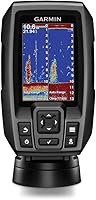
9 Best Fish Finders for Crappie Fishing (November 2026)
The best fish finders for crappie fishing include the Underwater Fishing Camera TMACTIME 1080P HD (best overall), the ReelSonar iBobber for docks and banks, and the LUCKYLAKER Sonar Kayak Fish Finder for kayak anglers.
On this page (8 sections)
- The best fish finders for crappie fishing, picked by how you fish
- How these fish finders compare side by side
- How we compared these units for crappie fishing
- What should a crappie angler look for in a fish finder?
- Do you need GPS and mapping for crappie fishing?
- Which unit fits your boat, kayak or the ice?
- How much should you spend on a crappie fish finder?
- Verdict: which fish finder should you buy for crappie?
The best fish finder for crappie fishing is the Underwater Fishing Camera TMACTIME 1080P HD, because a live 1080p picture shows brush piles, stake beds and the crappie sitting in them. Crappie hold tight to cover, and seeing the cover beats guessing at it.
If you fish from a dock or bank, the castable ReelSonar iBobber reads the water from your phone. For repeated trips on the same lake, the Humminbird Helix 5 CHIRP GPS G3 maps the bottom as you go.
The rest of this guide sorts nine units by how you fish. A kayak angler needs a wireless transducer; an ice angler needs a flasher or a long-lasting sonar ball; a beginner needs something simple to cast and read.
Our picks at a glance
-
1
-
2
-
3

- 4
 Check it
Humminbird Helix 5 CHIRP GPS G3
Best for mapping lakes - 5
 Best for shore-to-deep coverageCheck it
- 6
 Check it
LUCKY Portable Fish Finder Transducer Sonar Sensor
Best for ice fishing - 7
 Best for tackle-box storageCheck it
- 8
 Best for preset fish-size modesCheck it
- 9
 Best for first-time buyersCheck it
The best fish finders for crappie fishing, picked by how you fish
Every unit here reads depth and shows fish, but they differ in how they show cover. The top pick wins on clarity, while the others suit a boat, a kayak, the ice or a tight budget.
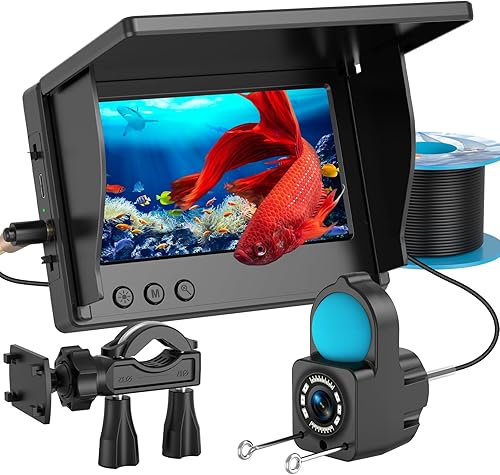
Underwater Fishing Camera TMACTIME 1080P HD: Best overall
- 1080p HD camera with 4.3 in LCD screen
- 6 IR lights for night and murky water
- IP68 waterproof to 15 m
- 5000mAh battery, up to 10 hours
A live camera picture is the clearest way to see how crappie sit in brush and stake beds. The night lights keep the view usable in stained water and after dark.
Pros
- Real-time underwater video
- Night vision for dark or murky water
- Up to 10 hours on a charge
- IP68 rated to 15 m
Cons
- Real-time viewing only, no recording
- Needs a cable down to the camera
The TMACTIME camera suits an angler who wants to see the brush pile, not just a mark on a screen. Its 1080p lens feeds a 4.3 in LCD, so you watch fish activity, structure and bait strikes as they happen.
A CMOS sensor and autofocus keep the picture sharp, and the shooting mode is set for underwater use.
Six IR lights keep the view usable in dark or murky water, which matters when crappie sit in stained cover. The camera and cable are IP68 rated to 15 m with a 100 kg load capacity, so it handles snags and rough handling.
The kit weighs 0.48 kg, light enough to carry in a kayak or set beside you on the ice.
The 5000mAh battery runs up to 10 hours, which covers a long crappie trip without a recharge. Setup is plug and play, and the kit includes the monitor, camera with a 15 m cable, stand and charging cable.
One real trade-off: it's real-time viewing only, with no recording. If you want to replay footage later, this isn't the unit.
For seeing exactly how crappie sit in cover right now, it's the clearest view here.
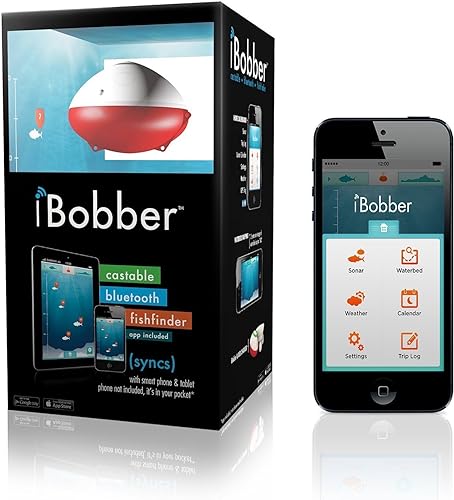
ReelSonar iBobber: Best for docks and banks
- Castable wireless sonar
- 135 ft depth range
- 10+ hours of battery life
- iOS and Android app with fish and strike alarms
Cast it from a dock or bank and read the sonar on your phone. The fish alarm helps when crappie gather under a pier or around brush.
Pros
- Castable from shore or a dock
- Fish and strike alarms
- Maps waterbeds and logs spots in the app
- LED beacon for night and ice
Cons
- Depends on a phone app for the display
- Depth tops out at 135 ft
The iBobber fits the dock and bank angler who wants sonar without a boat. It's a small castable unit that syncs to a free iOS or Android app over Bluetooth, with a depth range of 135 ft and 10+ hours of battery life.
It mounts to your fishing line, so there is nothing to clamp or bolt.
Crappie stack under piers and around brush, and the fish alarm tells you when fish gather there. A strike alert adds a second cue when fish are biting.
Depth-tagged fish icons are color coded by size, so you can tell a school of small fish from bigger marks. The patented sonar reads bottom contours and structures, not just depth.
The app maps waterbeds, logs spots and stores water temperature and depth in a trip log. It syncs up to 100 ft away from your phone.
An LED beacon helps for night fishing and ice, and the high-contrast design plus an anti-glare app setting keep the screen readable in bright outdoor light.
The trade-off against the camera is that you read sonar marks, not a picture. Against the boat units, it lacks a mounted screen.
For casting from shore, that portability is the point.
LUCKYLAKER Sonar Kayak Fish Finder: Best for kayak anglers
- Wireless transducer with 196 ft range
- 2.4 in TFT color LCD screen
- Fish size icons and depth alerts
- Water temperature and bottom contour
The wireless transducer frees a kayak or canoe from bracket work. The screen groups crappie into size icons so you can tell keepers from smaller fish.
Pros
- No bracket needed for the transducer
- Wireless range up to 196 ft
- Fish size icons on a color screen
- Built-in lamp attracts fish
Cons
- Screen runs 4-5 hours per charge
- 2.4 in display is small in bright sun
The LUCKYLAKER is built for a kayak or canoe where drilling and bracket work are a hassle. Its wireless transducer has a 196 ft operating range and goes straight into the water, with no bracket to install.
You can tie a line to the sensor and toss it, or fix it to the hull with the mounting tag.
The 2.4 in TFT color screen uses three colors to show bottom contour. Crappie size is split into large, medium and small icons, which helps you aim at keepers rather than dinks.
Depth alerts and water temperature round out the readout, and the unit shows the location of fish in real time.
The sonar carries an attractive lamp you can switch on to draw fish in. It works in fresh and salt water, and a simulation mode lets you try every function before you fish.
The whole unit weighs 0.54 kg, so it travels easily.
The screen runs 4-5 hours on a charge and measures just 2.4 in, so bright sun is a real challenge. Depth detection reaches 147 ft.
For a paddler who wants quick setup, this is the pick.
Humminbird Helix 5 CHIRP GPS G3: Best for mapping lakes
- Dual Spectrum CHIRP sonar
- Humminbird Basemap with 10,000+ lakes
- AutoChart Live real-time mapping
- 5 in color TFT display
This is the pick for an angler who fishes the same crappie lake again and again. AutoChart Live draws depth contours, bottom hardness and vegetation while you move.
Pros
- CHIRP sonar in wide and narrow modes
- Basemap covers 10,000+ lakes
- AutoChart Live mapping with 8 hours of recording
- Softkey controls work in bad weather
Cons
- Corded power only
- Transom mount needs a boat
The Helix 5 suits the crappie angler who fishes the same lake weekend after weekend. Dual Spectrum CHIRP sonar offers a wide mode for coverage and a narrow mode for detail, and a Low-Q transducer sharpens 2D target separation so fish holding close to structure read as separate marks.
Crappie relate to bottom hardness and vegetation, and AutoChart Live maps depth contours, bottom hardness and vegetation while you move, with 8 hours of built-in recording. The Humminbird Basemap covers 10,000+ lakes and continental U.S. coastlines, and the unit accepts premium LakeMaster, CoastMaster and Navionics charts.
A 5 in color TFT screen and softkey controls keep it usable in rough weather. The kit includes the control head, power cable, transom-mount transducer and gimbal bracket.
It weighs 2.1 lb and runs on corded power.
Compare it with the castable units: those are quicker to deploy from a dock or kayak, but this one builds a lake map you keep. For a dedicated crappie boat, that's worth the wiring.
Deeper PRO+ 2: Best for shore-to-deep coverage
- Castable sonar with wide, mid and narrow beams
- Accuracy to 330 ft
- Built-in GPS for bathymetric maps
- Target separation of 0.4 in in narrow beam
Cast it from a dock or kayak to scan deep water where crappie suspend away from cover. The narrow beam pinpoints small targets, and built-in GPS maps the bottom.
Pros
- Beam choice for coverage or detail
- 330 ft depth range
- Built-in GPS mapping in the free app
- Light enough for a tackle box
Cons
- Works through a phone app
- Premium price tier
The Deeper PRO+ 2 suits an angler who wants to cover open water and deep structure from shore or a kayak. Wide, mid and narrow beams let you sweep a flat or drill into a brush pile, with accuracy to 330 ft.
It casts far and reads deep, so you can work water you cannot reach from the bank.
Target separation of 0.4 in in the narrow beam means small marks show clearly, which helps when crappie suspend and you want to track a jig. The wide and mid beams separate targets to 1 in.
Built-in GPS creates bathymetric maps from the shore, dock or bank and saves them to the Fish Deeper app.
It's wireless and light at 3.2 oz, small enough to live in a tackle box. Its own Wi-Fi keeps connectivity solid without using mobile data.
The kit includes a neoprene pouch, USB wire and attachment bolts.
The cost is the premium price tier and the phone-based display. Against the iBobber, it goes deeper, maps better and separates targets more sharply.
Against the Helix 5, it trades a mounted screen and keypad for casting freedom. Pick it for shore-to-deep coverage.
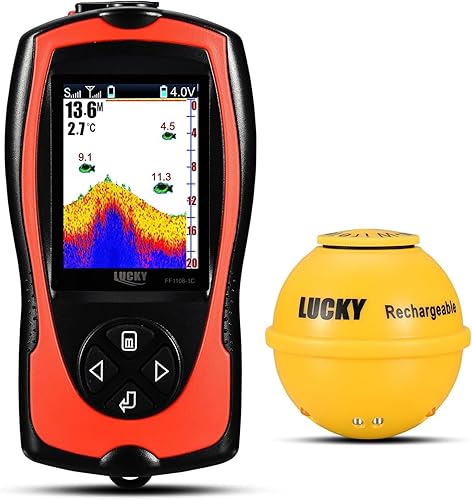
LUCKY Portable Fish Finder Transducer Sonar Sensor: Best for ice fishing
- 2.4 in TFT color LCD screen
- 147 ft depth detection
- Wireless range up to 492 ft
- Fish attractive lamp and rechargeable sonar
The sonar ball holds a charge for 10 hours, which covers a long day on the ice. A clear replacement cover lets you see the sensor in the dark.
Pros
- Long 10-hour sonar battery
- Wide 492 ft wireless range
- Clear cover for night use
- Sensitivity, zoom and alarm settings
Cons
- Handheld screen lasts about 4 hours
- Needs the antenna pulled out for a signal
This LUCKY unit suits the ice angler and the multi-season angler who moves between ice, shore and kayak. The sonar ball holds a charge for 10 hours, so a cold day on the ice doesn't end early.
The handheld screen is rechargeable too and runs about 4 hours.
Its wireless operating range reaches 492 ft and depth detection goes to 147 ft. The 90-degree transducer reads from 2.3 ft down to 147 ft.
A transparent replacement cover lets you see the sensor in the dark, and the sonar has two fish attractive lamps built in.
Settings include sensitivity, screen brightness, depth range, zoom, depth alarm, fish alarm and units. You can also choose the language.
A simulation mode lets you test it before the season. Both parts charge over USB.
The handheld screen runs about 4 hours per charge, shorter than the sonar, so plan a charging break on a long day. The antenna on the handheld needs to be pulled out for a signal.
For ice and mixed use, it's the pick.
Yoocylii Handheld Fish Finder: Best for tackle-box storage
- Neck strap and compact body
- 328 ft depth range
- 200 kHz sonar with 45-degree beam
- Fish alarm and backlight
This one hangs around your neck while you paddle or fish from a dock. It reads depth, fish size and bottom type without pairing to a phone.
Pros
- Wearable neck strap
- Deep 328 ft range
- Works in fresh and salt water
- Settings saved when switched off
Cons
- Runs on 4 AAA batteries
- Needs slow kayak speed under 5 mph
The Yoocylii suits the angler who wants a finder in a pocket and around the neck. A neck strap keeps it close while you paddle or work a dock, and the body fits in a tackle box.
A removable transducer float with a rubber stopper helps you set the sensor at the right level.
Its 200 kHz sonar uses a 45-degree beam and reads depth from 3 ft to 328 ft. The screen shows water depth, approximate fish location, fish size in three classes, and bottom type such as weeds, sand or rock.
A fish alarm and backlight help in low light, and five sensitivity levels let you tune out clutter.
It runs on 4 AAA batteries for 4-5 hours, so carry spares. For kayak use it wants a slow paddle under 5 mph with the transducer level.
It works in fresh and salt water.
Against the LUCKYLAKER, it trades a rechargeable screen for standard batteries and adds depth range. Pick it for simple carry-along use.
Hawkeye FishPod 5x: Best for preset fish-size modes
- 4 preset operating modes
- FishEcho tuning
- BottomScan bottom readings
- Vertical flasher for ice
The presets adjust screen settings for fish size, depth or schooling, so a crappie school stands out without menu digging. The flasher mode helps on ice.
Pros
- Modes tuned for fish size and depth
- BottomScan separates vegetation from hard bottom
- Flasher mode for ice fishing
- Mounts to any 1/4 x 20 bracket
Cons
- Bluetooth app needed for the display
- Depth range shorter than the top picks
The FishPod 5x suits an angler who would rather not fiddle with menus. Four preset modes adjust screen settings to target fish by size, depth or schooling, so a crappie school reads clearly with less setup.
The display is a 5 in screen viewed through the app.
FishEcho tunes the sonar in the water column to pinpoint fish size and depth while tuning out clutter, debris and false echoes. BottomScan adjusts bottom contour and composition readings to tell vegetation from soft or hard seabed, which matters when crappie sit in weed edges.
A vertical flasher mode amplifies recent echoes and makes it useful on ice.
The TraxNut mount attaches to any 1/4 x 20 bracket for boat or kayak use. Depth reaches 199 ft.
The unit is tiny at 22.68 g and comes with a charging cable and quick start guide.
The trade-off is the display: it runs through the app, and the depth range is shorter than the top picks. For preset simplicity with flasher support, it earns its place.
Deeper Start: Best for first-time buyers
- Castable Wi-Fi sonar
- Casting and depth range of 165 ft
- 40-degree sonar beam
- Night fishing mode
A simple castable unit for a new crappie angler who wants to read depth and fish location from shore. It charges in 2.5 hours and runs 6 hours.
Pros
- Easy to cast from shore or kayak
- Free app for iOS and Android
- Night fishing mode
- Saves scans with time and location
Cons
- Single beam only
- Shorter range than the PRO+ 2
The Deeper Start suits a first-time crappie angler who wants to read a new lake from shore. It's a castable Wi-Fi sonar with a 40-degree beam that casts and reads to 165 ft, and it generates its own Wi-Fi so it won't eat your mobile data.
No wires or external batteries are needed.
Pair it with the free Fish Deeper app on iOS or Android to see fish location and size, depth, bottom contour and vegetation. Every scan saves with time and location for easy revisits.
A night fishing mode adds low-light use.
It charges in 2.5 hours and runs 6 hours. It weighs just 0.07 kg, so it casts easily and stows in a bag.
The single beam and shorter range are the real limits against the PRO+ 2, which adds beams and depth.
For a casual angler on a budget, this is the simplest way in. Upgrade to the PRO+ 2 when you want beams and depth.
How these fish finders compare side by side
The table shows the spec that matters most for crappie: how deep the unit reads and what kind of screen you look at. Match the depth to your water and the display to how you fish.
| Product | Best for | Max depth | Battery life | Screen | Our score |
|---|---|---|---|---|---|
| Underwater Fishing Camera TMACTIME 1080P HD | overall | 15 m | Up to 10 hours | 4.3 in LCD | 9.4 |
| ReelSonar iBobber | docks and banks | 135 ft | 10+ hours | 9.1 | |
| LUCKYLAKER Sonar Kayak Fish Finder | kayak anglers | 147 ft | 4-5 hours | 8.9 | |
| Humminbird Helix 5 CHIRP GPS G3 | mapping lakes | 8.8 | |||
| Deeper PRO+ 2 | shore-to-deep coverage | 330 ft | 8.5 | ||
| LUCKY Portable Fish Finder Transducer Sonar Sensor | ice fishing | 147 ft | 4 hours handheld, 10 hours sonar | 8.4 | |
| Yoocylii Handheld Fish Finder | tackle-box storage | 328 ft | 8.2 | ||
| Hawkeye FishPod 5x | preset fish-size modes | 199 ft | 8.0 | ||
| Deeper Start | first-time buyers | 50 m | 6 hours | 7.2 |
How we compared these units for crappie fishing
We compared specs and features against what crappie anglers actually need: reading brush and stake beds, spotting suspended schools and handling stained water. Depth range, screen type and battery life carried the most weight.
Our score weighs specs, features and buyer feedback against what you're shopping for. A camera wins here because cover visibility is the hard part of crappie fishing.
A castable unit wins points for shore access. A boat unit wins for mapping.
We also weighed how each unit fits its place in a boat, kayak or ice sled. A great screen with a short battery loses points.
So does a deep range on a unit that's awkward to deploy. Phone-app displays cost a little because they depend on your device staying charged and dry.
What should a crappie angler look for in a fish finder?
A crappie finder needs to show cover and fish close together, so look for target separation and a screen you can read in daylight. Depth range matters less than how clearly the unit marks brush and suspended fish.
How much depth range do you need?
Most crappie water sits under 40 ft, so 100 ft of range leaves room. The units here run from 135 ft to 328 ft, and even the shortest covers typical brush and dock edges.
The Yoocylii's 328 ft is more than crappie need, but it costs nothing in use.
Which display suits your boat or kayak?
A mounted color screen like the Helix 5's 5 in TFT works best on a boat with power. A handheld screen such as the LUCKYLAKER's 2.4 in saves space on a kayak.
A phone app, as on the iBobber and Deeper units, means no extra screen at all. The FishPod's 5 in view also runs through the app.
Camera or sonar for seeing brush?
A camera shows the cover itself and how fish sit in it, which the TMACTIME does best. Sonar covers more water faster and works in any light.
Many crappie anglers carry a camera for close inspection and sonar for searching. A camera needs clear enough water to see; a sonar unit reads stained water without trouble.
Do you need GPS and mapping for crappie fishing?
GPS and mapping pay off when you fish the same lake often. A unit with AutoChart Live or bathymetric mapping records where brush piles and ledges sit, so you return to them next trip.
The Humminbird Helix 5 CHIRP GPS G3 draws maps while you boat. The Deeper PRO+ 2 and Deeper Start save scans to the app with time and location.
If you move between many lakes or fish from shore only, a simpler unit does the job.
When mapping is worth the cost
Pick a mapping unit when you fish a home lake more than a few times a season. Pick a plain sonar unit when you fish new water each trip or just want to find fish today.
Mapping also helps on a lake with few visible landmarks, where a saved contour line is the only way back to a brush pile.
Which unit fits your boat, kayak or the ice?
Boat anglers should pick a transom-mounted unit with corded power and a larger screen. The Humminbird Helix 5 is the clear choice for a crappie boat that runs electronics.
Kayak and canoe anglers want a wireless transducer and a small screen or phone display. The LUCKYLAKER's 196 ft wireless range and no-bracket setup suit a paddle craft.
A castable unit like the iBobber also works from a kayak. The Yoocylii's neck strap keeps a finder close while both hands are on the paddle.
Ice anglers need a flasher mode or a long sonar battery. The Hawkeye FishPod 5x has a vertical flasher, and the LUCKY's sonar ball runs 10 hours.
Our fish finder for ice fishing guide covers cold-weather picks in more detail.
Shore and dock setups
If you fish from a bank or pier, a castable unit is the only realistic option. The iBobber, Deeper PRO+ 2 and Deeper Start all cast from shore.
The iBobber's fish alarm helps when crappie gather under a dock. The PRO+ 2 adds the reach to scan deeper water past the pier end.
How much should you spend on a crappie fish finder?
Budget and needs should decide your spend, not the highest spec. A castable unit covers shore and dock fishing for less than a mapping boat unit, and a camera costs less than a full chartplotter setup.
Budget tier
A budget unit like the Yoocylii or Deeper Start reads depth and fish location without a mounted screen. That's enough for a casual crappie angler.
The Yoocylii runs on AAA batteries you likely already carry, and the Deeper Start casts straight from the bank.
Mid-range tier
Mid-range units add wireless transducers, color screens and longer batteries. The LUCKYLAKER and LUCKY Portable sit here.
They pair a handheld display with a separate sonar ball, so the sonar often outlasts the screen.
Premium tier
Premium units add CHIRP sonar, GPS, mapping and multiple beams. The Humminbird Helix 5 and Deeper PRO+ 2 sit here.
For a dedicated crappie boat or a lake you fish all season, the mapping pays you back.
Verdict: which fish finder should you buy for crappie?
The best fish finder for crappie fishing for most anglers is the Underwater Fishing Camera TMACTIME 1080P HD, because a live picture of the brush pile is the clearest edge you can get. Pick the ReelSonar iBobber if you fish from a dock or bank and want sonar on your phone.
Pick the LUCKYLAKER if you paddle and want a wireless transducer with no bracket. Pick the Humminbird Helix 5 CHIRP GPS G3 if you fish one lake from a boat and want to map it.
For ice, take the Hawkeye FishPod 5x or the LUCKY Portable. For a first unit on a budget, the Deeper Start is the simplest way to read a new lake.
If you're just starting out, our fish finder for beginners guide walks through the first unit. River anglers should read the best fish finder for river fishing picks, and saltwater anglers can check the best fish finders for saltwater fishing before buying.
Our top 3 picks at a glance
-
1
-
2
-
3
Frequently asked questions
What depth range do I need for crappie?
Most crappie fishing happens in water under 40 ft, so a unit rated to 100 ft or more gives plenty of headroom. A shorter range like 135 ft still covers typical brush piles and dock edges.
Is a camera or sonar better for finding crappie?
A camera shows you the cover and how fish sit in it, which suits clear or stained water and ice. Sonar covers more water faster and works in any light, so many anglers carry one of each.
Can I use a castable fish finder from a boat?
Yes. A castable unit like the iBobber or Deeper works from a boat, dock or kayak as long as you can cast it and keep your phone or tablet handy for the display.
Do crappie finders work through ice?
Many do. Look for a unit with a flasher mode or a sonar ball you can lower through the hole, and check that the battery holds up in cold weather before a long trip.
How long should a fish finder battery last for a full day?
Aim for at least 6 hours so a morning-to-afternoon trip does not need a recharge. Units with a separate sonar battery often run longer than the handheld screen.