9 Best Fish Finders for Shallow Water (November 2026)
The best fish finders for shallow water include the FishPRO 2026 Upgrade HD 1080P Underwater for seeing fish react to your bait, the TMACTIME 1080P HD Underwater Fishing Camera for a light, packable camera kit, and the ReelSonar iBobber for casting from shore or a dock.
On this page (8 sections)
- The best fish finders for shallow water
- How these fish finders compare
- How we compared these shallow-water fish finders
- What should you look for in a shallow-water fish finder?
- How do you set up a fish finder in shallow water?
- Which shallow-water fish finder suits your boat or bank?
- How much should you spend on a shallow-water fish finder?
- Which fish finder is best for shallow water?
The best fish finder for shallow water is the FishPRO 2026 Upgrade HD 1080P underwater camera, because a live 7-inch screen shows you fish, cover and how they respond to your bait in water only a few feet deep. Pick the ReelSonar iBobber if you cast from a dock or bank, the Humminbird Helix 5 CHIRP GPS G3 if you want depth and mapping at the console, or the LUCKY Kayak unit if you paddle into the shallows.
Shallow water is hard on sonar. A wide cone hits the bottom fast and the return gets crowded with weeds, rocks and surface noise.
A camera sidesteps most of that, and a castable sonar gets you into skinny water without mounting anything on a hull.
This guide covers nine picks for lakes, rivers, flats and ice. Read our fish finder for beginners guide first if you're still learning how sonar reads bottom.
Our picks at a glance
-
1
 Best for seeing fish react to your bait
FishPRO 2026 Upgrade HD 1080P Underwater
9.6/10 our score
See it on Amazon -
2
 Best for a light, packable camera kit
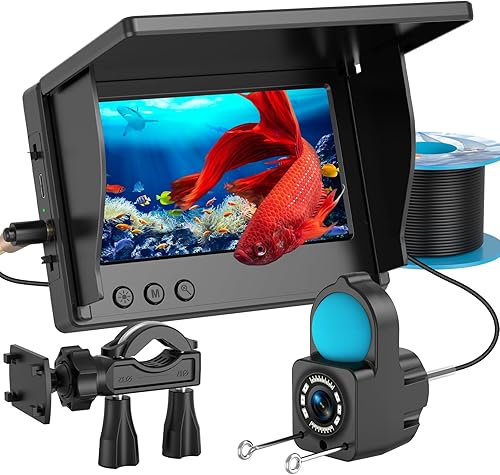
TMACTIME 1080P HD Underwater Fishing Camera
9.4/10 our score
See it on Amazon -
3
- 4
 Check it
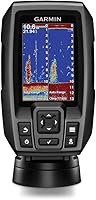
Humminbird Helix 5 CHIRP GPS G3
Best for depth and mapping at the console - 5
 Check it
Anminto Underwater Fishing Camera 5 Inch
Best for long days on the ice or river - 6
 Check it
LUCKY Portable Fish Finder Transducer
Best for a low-cost sonar with a screen - 7
 Check it
Humminbird XPLORE Series GPS Fish Finder MEGA
Best for serious mapping on bigger boats - 8
 Best for a simple castable sonar on a budgetCheck it
- 9
 Check it
LUCKY Kayak Wireless Fish Finder
Best for casting from a kayak
The best fish finders for shallow water
The top pick gives you eyes underwater, while the rest split into castable sonar and mounted units. Match the pick to how you fish before you compare extra features.
Two things separate the field. The cameras show you what is down there, and the sonar units tell you where the bottom and the fish sit.
In a few feet of water, seeing beats guessing, which is why a camera leads the list. The mounted units earn their place when you need to cover a flat or keep a permanent station on a boat.
FishPRO 2026 Upgrade HD 1080P Underwater: Best for seeing fish react to your bait
- 7-inch full-color IPS monitor
- 82 ft magnetic cable spool
- IR and LED light modes
- 10,000mAh battery, up to 20 hours
A live underwater view of shallow cover, fish size and bait response, with light for dark or stained water.
Pros
- True 1080P picture on a 7-inch IPS screen
- IR and white LED modes for murky water
- Magnetic spool separates from the monitor
Cons
- Real-time viewing only, no recording
- Cable handling takes practice in current
The FishPRO suits an angler who fishes weed edges, dock shadows and shallow flats and wants to see what happens after the bait lands. Its 7-inch IPS screen shows a true 1080P color picture, and the camera's fish-friendly shape and color are built not to spook fish in clear shallows.
A magnetic spool lets you run the monitor and the 82 ft cable separately or clip them together. The adjustable fin sets the camera at 45, 90 or 180 degrees so you can aim it along a weed line or straight down.
Tap the LED/IR button to switch between full-color white light and black-and-white infrared when the water turns dark or stained. The maker says the 10,000mAh battery runs up to 20 hours, and you can fish while it charges over USB-C.
The 1.8 mm cable is rated to 88 lb of pull. Standard quarter-20 mounts let it sit on a tripod sold separately.
The kit includes two 0.35 oz weights and a carrying bag.
Trade-off: this model does real-time viewing only. It doesn't record or offer HDMI out.
Against the cheaper cameras here, you pay more for the bigger, sharper screen and the longer battery.
TMACTIME 1080P HD Underwater Fishing Camera: Best for a light, packable camera kit
- 4.3-inch LCD display
- Six IR lights for low light
- IP68 waterproof cable to 15 m
- 5000mAh battery, up to 10 hours
A smaller, lighter camera that fits in a kayak hatch or boat bag and still shows real-time color video.
Pros
- Light enough to carry on a kayak
- Six IR lights for night viewing
- Rated IP68 to 15 m
Cons
- Smaller screen than the FishPRO
- Real-time viewing only, no recording
TMACTIME fits a kayak or small boat where space is tight. The kit weighs about 0.48 kg and packs a 4.3-inch LCD, a 15 m cable and a stand into one bag.
It's the camera to grab when you want a quick look under a dock or along a weed line without hauling a full rig. The 1080P CMOS sensor and autofocus do the picture, and the whole setup is plug and play with no separate battery or light cable.
Six IR lights handle low light and night fishing, and the cable is IP68 rated with a 100 kg load capacity. The maker rates the 5000mAh battery at up to 10 hours, enough for a morning and an afternoon on the water.
The 15 m cable is shorter than the FishPRO's 82 ft spool, so very deep holes are out of reach. For shallow flats and holes a few feet down, it is plenty.
Its screen is smaller than the FishPRO's, so fine detail like fish size takes more squinting. For paddlers and packable kits, that size is the point.
Pick this one when portability matters more than screen size. Pick the FishPRO when you fish from a boat and want the sharper, bigger picture.
ReelSonar iBobber: Best for casting from shore or a dock
- Castable wireless sonar
- Depth to 135 ft
- Fish and strike alarms
- Free iOS and Android app
A pocket sonar you cast like a bobber and read on your phone, good for docks, banks and shallow coves.
Pros
- No boat or mount needed
- Maps bottom contours and marks spots in the app
- Fish and strike alarms
Cons
- Phone screen only, no dedicated display
- Bluetooth link reaches about 100 ft
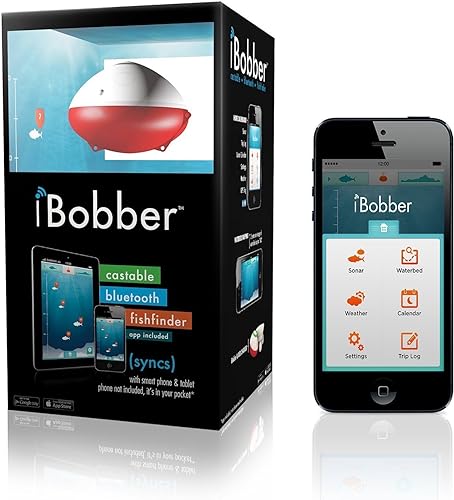
The iBobber is the pick for shore and dock anglers who can't mount a transducer. Tie it to your line, cast it like a bobber, and read depth, bottom contours and fish on the free iOS or Android app over Bluetooth.
The sonar shows both still and moving objects and tags fish icons by size.
Its fish and strike alarms let you know when fish gather under a dock or when one hits. The app maps waterbeds, marks spots and logs water temperature and depth with each trip.
ReelSonar rates the rechargeable battery at 10+ hours and the depth range at 135 ft. A high-contrast body and the app's anti-glare setting help in bright sun.
The LED beacon aids night fishing.
The catch is the phone-only display. You won't get a dedicated screen, and the Bluetooth link reaches about 100 ft.
Compare it with the Deeper Start, which costs less but uses a narrower 40-degree beam and runs 6 hours per charge. Pick the iBobber for a longer battery and alarms.
Humminbird Helix 5 CHIRP GPS G3: Best for depth and mapping at the console
- Dual Spectrum CHIRP sonar
- Built-in GPS with Humminbird Basemap
- AutoChart Live mapping
- 5-inch color display
A mounted unit that gives you depth, fish arches and lake maps, with CHIRP settings for reading tight shallow structure.
Pros
- Narrow CHIRP mode separates close targets
- Basemap covers 10,000+ lakes
- AutoChart Live builds your own depth maps
Cons
- Transom mount needs a boat
- Costs more than the castable picks
The Helix 5 suits an angler with a boat who wants depth, fish arches and maps in one unit. Its Dual Spectrum CHIRP sonar offers Wide Mode for coverage and Narrow Mode for detail, which helps separate fish from bottom in shallow structure.
The Low-Q transducer sharpens 2D target separation.
Humminbird's Basemap covers more than 10,000 lakes and U.S. coastlines. AutoChart Live builds your own depth-contour maps as you boat, with eight hours of built-in recording.
A 5-inch color TFT screen and softkey controls keep menus usable in rain and spray. It's compatible with LakeMaster, CoastMaster and Navionics cards for more detail.
This is the pick when you fish from a hull and want a permanent station. It's a transom-mount unit, so it needs a boat, and it sits in a higher price tier than the castable sonars.
The kit includes the control head, power cable, transducer and gimbal bracket. Our fish finder with GPS guide covers marking spots in more detail.
Anminto Underwater Fishing Camera 5 Inch: Best for long days on the ice or river
- 5-inch IPS screen, 1000TVL
- 178-degree wide view
- 12 infrared lights
- 8000mAh battery, 10 to 14 hours
A wide-angle camera with a long battery life, useful when you sit over one shallow hole or pool for hours.
Pros
- 178-degree wide view covers more water
- 10 to 14 hours per charge
- IP68 rated cable handles 100 kg pull
Cons
- 1000TVL resolution is below the FishPRO's 1080P
- No recording function
Anminto suits the angler who sits over one hole or pool for hours. The 5-inch IPS screen has a 178-degree wide viewing angle, so more of the shallow bottom stays in frame while you wait for fish to move in.
The 2.1 mp sensor records 1080P video for the screen.
Twelve infrared lights switch on with one tap for dark or murky water. The maker rates the 8000mAh battery at 10 to 14 hours, longer than the FishPRO's 20-hour claim on paper but close in real terms for a long day.
The IP68 cable handles up to 100 kg of pull and runs 65 ft. The maker lists lag-free digital transmission and 9000Pa pressure handling.
The resolution is 1000TVL rather than true 1080P, so the picture is a step below the FishPRO's. Pick it when battery life and a wide view matter more than the sharpest image.
It also doesn't record.
LUCKY Portable Fish Finder Transducer: Best for a low-cost sonar with a screen
- 2.4-inch color LCD
- Wireless sonar to 147 ft
- Fish attractor lamp
- Rechargeable handset and sensor
A budget handheld that shows depth, temperature and fish size without needing a phone.
Pros
- Dedicated display, no phone needed
- Fish attractor lamp on the transducer
- Long wireless range for the money
Cons
- Small 2.4-inch screen
- Handset runs about 4 hours per charge
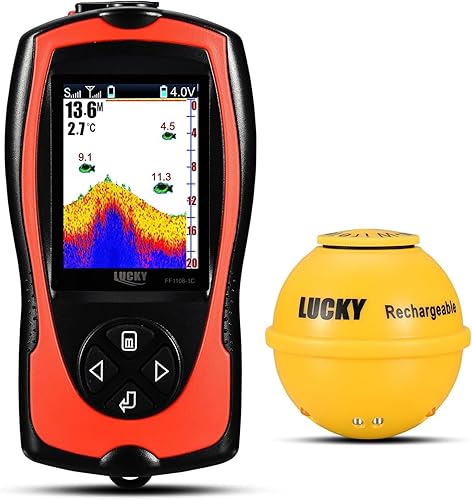
The LUCKY handheld is the budget sonar pick for someone who wants a screen without spending much. It shows depth, water temperature and fish size on a 2.4-inch color LCD, and its fish attractor lamp on the transducer helps draw fish into view.
A transparent cover on the sensor lets you spot it in the dark.
The wireless transducer reaches 147 ft deep and a 492 ft operating range. A 90-degree detection angle covers a wide patch of water.
A simulation mode lets you try every function before you fish. Both the handset and the sensor recharge over USB.
Settings include sensitivity, screen brightness, depth range, zoom and fish alarms.
The screen is small and the handset runs about 4 hours per charge, so plan shorter trips or carry a power bank. Pick it if you want a dedicated display and a low price, and you're willing to trade screen size and battery life for it.
Humminbird XPLORE Series GPS Fish Finder MEGA: Best for serious mapping on bigger boats
- 10-inch touchscreen and keypad
- MEGA Side Imaging+ to 200 ft per side
- MEGA Down Imaging+ to 200 ft
- LakeMaster and CoastMaster VX card
A premium control head for anglers who map and scan large shallow flats, sold without a transducer.
Pros
- Big 10-inch touchscreen
- MEGA imaging covers wide shallow flats
- One-Boat Network and Bluetooth integration
Cons
- Control head only, no transducer in the box
- Premium price tier
The Humminbird XPLORE is the premium pick for bigger boats that fish wide shallow flats. Its MEGA Side Imaging+ reaches 200 ft per side, and MEGA Down Imaging+ covers 200 ft deep, so you scan broad water instead of a narrow circle under the hull.
Dual Spectrum CHIRP adds fish detection and structure clarity.
The 10-inch touchscreen and keypad both work, and Bluetooth adds anchor control and phone notifications. A LakeMaster and CoastMaster VX card for the US and Canada comes in the box.
AutoChart Live maps depth contours, bottom hardness and vegetation in real time. One-Boat Network integration works with Minn Kota trolling motors and Cannon products.
The unit weighs 4.8 pounds and runs high-speed Ethernet and NMEA 2000.
This is a control head only, with no transducer included, so you buy the sonar separately. That and the premium price make it a pick for dedicated boat owners, not a first fish finder.
Our pontoon boat fish finder guide covers wide-deck installs.
Deeper Start: Best for a simple castable sonar on a budget
- Castable Wi-Fi sonar
- Casts and reads to 165 ft
- 40-degree beam
- Free Fish Deeper app
An easy cast-and-read sonar for bank and dock anglers who want the basics without a big spend.
Pros
- Simple to pair and cast
- Saves each scan with time and location
- Night fishing mode
Cons
- Narrower beam than the iBobber
- 6 hours per charge
Deeper Start is the simplest castable sonar here. It pairs over its own Wi-Fi with the free Fish Deeper app and shows fish location and size, depth, bottom contour and vegetation on your phone.
Because it runs its own Wi-Fi, it won't eat your mobile data.
It casts and reads to 165 ft with a 40-degree beam, and it saves every scan with time and location for easy revisits. A night fishing mode helps after dark.
Deeper rates the battery at 6 hours and a full charge in 2.5 hours. The unit weighs 0.07 kg and fits in a pocket.
The 40-degree beam is narrower than the iBobber's coverage, so you'll cast more to scan the same water. Pick it for easy bank and dock trips on a budget.
Pick the iBobber if you want alarms and a longer battery.
LUCKY Kayak Wireless Fish Finder: Best for casting from a kayak
- Wireless range to 853 ft
- 3.5-inch horizontal LCD
- 90-degree beam, 3 to 147 ft depth
- Castable floating sensor
A castable unit with a wide beam and a dedicated screen, handy when you fish from a kayak or canoe.
Pros
- Very long wireless range
- Wide 90-degree beam covers shallow water
- Screen included, no phone needed
Cons
- Lower overall score than the other picks
- Handheld design suits paddling more than open boats
The LUCKY Kayak unit is built for paddlers. The handheld display and floating sensor together weigh less than a 1-liter water bottle, and its wireless range reaches 853 ft, so you can cast well away from the kayak.
The 0.7 kg kit needs no drilling or bracket.
The 3.5-inch horizontal LCD scrolls right to left and shows fish icons with their exact depth marked next to them. A 90-degree beam scans from 3 to 147 ft.
Tie the sensor to your line or the included tether and cast it like a bobber. The screen scrolls the history of what passed under the sensor, so you can track a fish's movement.
Its lower score reflects the smaller screen and simpler feature set than the cameras here. Pick it if you fish from a kayak or canoe and want a dedicated screen without drilling.
It also works from shore and ice holes. For moving water, see our fish finder for river fishing guide.
How these fish finders compare
| Product | Best for | Screen | Max depth | Battery | Our score |
|---|---|---|---|---|---|
| FishPRO 2026 Upgrade HD 1080P Underwater | seeing fish react to your bait | 7 in IPS | 82 ft | 10,000mAh | 9.6 |
| TMACTIME 1080P HD Underwater Fishing Camera | a light, packable camera kit | 4.3 in LCD | 15 m | 5000mAh | 9.4 |
| ReelSonar iBobber | casting from shore or a dock | 10+ hours | 9.1 | ||
| Humminbird Helix 5 CHIRP GPS G3 | depth and mapping at the console | 5 in color TFT | 8.8 | ||
| Anminto Underwater Fishing Camera 5 Inch | long days on the ice or river | 5 in IPS | 8000mAh | 8.7 | |
| LUCKY Portable Fish Finder Transducer | a low-cost sonar with a screen | 2.4 in color LCD | 147 ft | 8.4 | |
| Humminbird XPLORE Series GPS Fish Finder MEGA | serious mapping on bigger boats | 10 in color TFT | 7.9 | ||
| Deeper Start | a simple castable sonar on a budget | 6 hours | 7.2 | ||
| LUCKY Kayak Wireless Fish Finder | casting from a kayak | 3.5 in LCD | 147 ft | 6.8 |
How we compared these shallow-water fish finders
We checked each unit's specs against what shallow-water fishing asks for. The beam angle and mounting type matter most, because a wide cone crowds the bottom return in a few feet of water.
For cameras, we weighed screen size and resolution against battery life and cable length. A 7-inch 1080P screen shows more detail than a 1000TVL 5-inch screen, but a smaller kit packs easier in a kayak.
Cable length decides how deep a camera can reach: 82 ft on the FishPRO, 65 ft on the Anminto and 15 m on the TMACTIME.
For sonar units, we looked at depth range, wireless reach, CHIRP modes and mapping. A castable unit gets you into skinny water without a hull, while a transom mount gives you a permanent console station.
We also noted which units come with a dedicated screen and which lean on a phone app.
Our score weighs specs, features and buyer feedback against what you're shopping for. We don't test units on the water.
We read the maker's published specs and match them to the job each pick does best. That is why a camera leads a list about shallow water: in a few feet, a picture tells you more than a mark.
What should you look for in a shallow-water fish finder?
Look for a narrow beam or a camera, since wide cones lose detail in a few feet of water. A 20-degree sonar cone covers a small circle when depth is shallow, so a narrow CHIRP mode or a camera view reads fish and structure more clearly.
Depth range matters less than you think in shallows. A unit rated to 135 ft still works in 4 ft, but the screen needs to resolve a crowded bottom return.
Check that the model lists a narrow beam setting or a zoom feature. A wide 40-degree beam like the Deeper Start covers more water per cast but shows less detail close in.
Mounting decides where you can use it. A transom unit needs a hull.
A castable or wireless sensor works from shore, a dock or a kayak with no drilling. A camera needs a cable you can lower and retrieve.
Check the cable length against the water you fish.
Should you choose a camera or a sonar unit?
Choose a camera in clear water under about 15 feet. You see fish species, size and how they react to bait.
Sonar covers more water and works in stained or dark conditions, but its marks tell you less about what kind of fish you're over. A camera with light modes like the FishPRO's LED and IR handles stained water and night, though a sonar unit still scans wider.
How much does mounting matter?
It matters more in shallows than anywhere else. A transducer mounted too high loses bottom at speed, and one mounted too low throws spray.
Castable sensors avoid the problem entirely, which is why they suit docks, banks and kayaks. A camera only needs a line or cable you can lower, so it works from any edge of the water.
How do you set up a fish finder in shallow water?
Set the transducer face just below the hull and level, then test at slow speed. A low mount narrows the dead zone above the bottom, so fish sitting close to structure still show as arches.
Turn down sensitivity until the bottom line stays solid. Surface clutter and weeds create false marks in skinny water.
A narrower beam or a CHIRP narrow mode cleans up the return. On a castable unit, pull the antenna out before you fish, as LUCKY notes, or the wireless link weakens.
For a camera, lower the lens until it sits a foot or two above the bottom, facing along the structure you want to check. In current, add the included weights so the cable hangs straight and the view stays steady.
Set the fin to aim the lens where you want it. On the FishPRO, the 45, 90 and 180 degree fin choices let you look straight down or along the bottom.
Which shallow-water fish finder suits your boat or bank?
Match the pick to how you reach the water. That matters more than raw depth specs in shallows.
If you fish from a boat
A transom unit like the Helix 5 gives you depth, fish arches and maps in one screen. It reads structure and drop-offs as you idle across a flat, and AutoChart Live builds depth maps of water you fish often.
For bigger boats on wide flats, the XPLORE adds MEGA side imaging that scans 200 ft to each side.
If you fish from a kayak or canoe
A castable or wireless unit keeps the hull clear. The LUCKY Kayak unit and the Deeper Start both need no bracket.
Pick the LUCKY for the longer wireless range and dedicated screen, and the Deeper Start for a simpler, cheaper kit. The TMACTIME camera also packs small enough for a hatch.
If you fish from shore or a dock
The iBobber is the easiest pick. Cast it out, read depth and bottom contour on your phone, and let the alarms tell you when fish gather.
It's also the pick for pier fishing at night, since the app works after dark. The Deeper Start covers the same trips with a simpler app and a shorter battery.
If you fish on ice or in a river
A camera wins. The FishPRO and Anminto both handle ice and river pools.
The FishPRO gives the sharper 1080P picture and the longer battery claim, while the Anminto offers a wider view and a 10 to 14 hour run time. For a hole you sit over all day, the wide view keeps more bottom in frame.
How much should you spend on a shallow-water fish finder?
Spend on the screen and the mounting type, not on depth range. A camera in the 100 dollars to 300 dollars tier covers most shallow-water needs.
A mounted CHIRP unit with GPS sits in a mid-range bracket. A control head with MEGA imaging is a premium buy for boat owners.
The FishPRO costs more than the TMACTIME and Anminto cameras, but its 7-inch 1080P screen and 20-hour battery claim justify the step up for anglers who fish often. A budget handheld like the LUCKY gives you depth and temperature without a phone or a hull.
The iBobber and Deeper Start sit between the two, with a phone as the screen.
If you fish a few weekends a year, the iBobber or Deeper Start covers shore and dock trips for less. If you fish from a boat most weekends, put the money into the Helix 5 instead.
If you run a bigger boat and scan wide flats, the XPLORE is the top tier, though you still need to buy a transducer.
Which fish finder is best for shallow water?
The FishPRO 2026 Upgrade HD 1080P underwater camera is the best fish finder for shallow water for most anglers, because its 7-inch 1080P screen shows fish, cover and bait response in water where sonar cones crowd. Pick the ReelSonar iBobber for a castable sonar from shore or a dock.
Pick the Humminbird Helix 5 CHIRP GPS G3 for depth, arches and maps at the console. Pick the LUCKY Kayak unit if you paddle into the shallows.
For clear water under 15 feet, the FishPRO's live view settles the guesswork that sonar leaves in skinny water. For stained water or wide flats, the Helix 5 scans more ground in less time.
Read our fish finder for beginners guide if you're still learning how to read sonar marks. Start with a camera in clear water, then add a castable or mounted unit when you need to cover more ground.
Our top 3 picks at a glance
-
1
Best for seeing fish react to your bait
FishPRO 2026 Upgrade HD 1080P Underwater
9.6/10 our score
See it on Amazon -
2
Best for a light, packable camera kit
TMACTIME 1080P HD Underwater Fishing Camera
9.4/10 our score
See it on Amazon -
3
Frequently asked questions
What is the best fish finder for shallow water under 10 feet?
A live underwater camera works best in water under 10 feet, because you see fish, cover and bait response directly instead of reading sonar marks. The FishPRO 2026 Upgrade HD 1080P camera gives the clearest picture, and a castable sonar like the iBobber works well when you fish from shore.
Is a camera or sonar better for shallow flats?
A camera wins in clear water under about 15 feet, since you see fish species and size. Sonar covers more ground and works in stained water or at night.
Many anglers carry both: sonar to find the flat, camera to see what sits on it.
Can I use a fish finder from a kayak in shallow water?
Yes. A castable or wireless sonar like the LUCKY Kayak unit or the Deeper Start needs no drilling or bracket.
Cast the sensor into the shallows and read the screen or phone app, which keeps the kayak hull clear.
How deep should I set a transducer in shallow water?
Set the transducer so its face sits just below the hull and level with the waterline, then test at slow speed. In shallow water, a low mount reduces the dead zone above the bottom and shows fish that sit close to structure.
Why does my fish finder lose bottom in shallow water?
Surface clutter and a wide sonar cone cause most lost-bottom readings in shallow water. Slow down, switch to a narrower beam or CHIRP mode, and lower the sensitivity until the bottom line stays solid.