9 Best Fish Finders for Inflatable Boats (November 2026)
The best fish finders for inflatable boats include the Underwater Fishing Camera TMACTIME 1080P HD for seeing the bottom in detail, the Humminbird XPLORE Series GPS Fish Finder (best overall for serious inflatable setups), and the Humminbird Helix 5 CHIRP GPS G3 for chart plotting on a small console.
On this page (7 sections)
- The best fish finders for inflatable boats
- How these fish finders for inflatable boats compare
- How we compared these fish finders
- What should you check before buying a fish finder for an inflatable boat?
- How do you power a fish finder on an inflatable?
- Which fish finder suits which inflatable setup?
- Verdict: the best fish finder for an inflatable boat
The best fish finder for an inflatable boat is the Humminbird XPLORE Series, because its 10-inch touchscreen and MEGA imaging give clear reads without a permanent helm. If you want a unit that casts straight from the boat and needs no bracket at all, the Deeper PRO+ 2 is the simpler choice.
Inflatable boats create their own set of rules. The fabric flexes, the tubes sit close to the water, and most boats have no console to bolt a screen onto.
A good fish finder for this kind of boat is light, easy to clamp or cast, and runs long enough for a full session on the water.
That pushes the choice toward two groups: fixed units that clamp to a seat or a portable transducer arm, and wireless castable units you throw over the side. Both work, but they solve different problems.
Our fish finder for beginners guide covers the basics if this is your first unit.
Our picks at a glance
-
1
 Best for seeing the bottom in detail
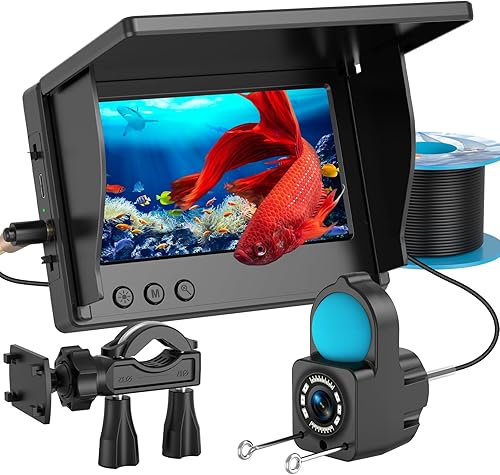
Underwater Fishing Camera TMACTIME 1080P HD
9.4/10 our score
See it on Amazon -
2
 Best overall for serious inflatable setups
Humminbird XPLORE Series GPS Fish Finder
9.4/10 our score
See it on Amazon -
3
 Best for chart plotting on a small console
Humminbird Helix 5 CHIRP GPS G3
8.8/10 our score
See it on Amazon
- 4
 Best castable option with no mountingCheck it
- 5
 Best budget handheld for small boatsCheck it
- 6
 Best protection for a portable fish finderCheck it
- 7
 Best low-cost unit with down imagingCheck it
- 8
 Best simple castable unit for shore and boatCheck it
- 9
 Check it
LUCKY Kayak Wireless Fish Finder
Best long-range wireless readout
The best fish finders for inflatable boats
The best overall is the Humminbird XPLORE, while the other picks each answer a specific need: no mounting, low cost, long wireless reach or protection for the electronics. Decide by how you fish and how much setup you'll tolerate each trip.
A fixed unit keeps its screen on and scanning while you move, so it suits trolling and covering water. A castable unit reads only the patch of water it lands in, but it sets up in seconds and never needs a bracket, cable run or battery pack strapped to the boat.
The write-ups below show where each model lands on that split.
Underwater Fishing Camera TMACTIME 1080P HD: Best for seeing the bottom in detail
- 1080P HD camera on a 15m cable
- 4.3-inch LCD screen
- Six IR lights for low light
- IP68 waterproof
- 5000mAh battery, up to 10 hours
A live underwater camera that shows fish, bait and structure directly instead of drawing arches on a screen.
Pros
- Real-time HD picture
- IR lights help in murky water
- Long 10-hour battery
Cons
- No recording, live view only
- Cable limits reach to 15m
The TMACTIME camera suits an angler who wants to see the bottom rather than read arches on a sonar screen. Its 1080P lens sends a live picture to a 4.3-inch LCD on a 15m cable, so you can drop it beside the boat and watch fish move around bait and structure.
Six IR lights push the picture into low light, which helps in murky water, at night or under ice. The IP68 housing and cable handle depths to 15m with a 100kg load rating, and the 5000mAh battery runs up to 10 hours.
Autofocus and a CMOS sensor keep the image sharp as fish pass the lens.
The trade-off against the sonar units here is reach and coverage. A cable stops at 15m, while a castable unit reads to 330 ft.
The camera shows real fish, and it does one thing the sonar units can't: it shows your bait and how fish react to it. That makes it a strong tool for still fishing and a poor one for covering water.
Choose it for still fishing from a moored or drifting inflatable where you can lower the camera and watch. Skip it if you troll or move quickly between spots, because the live view only helps where the lens hangs.
If you fish rivers as well, our fish finder for river fishing picks cover that case.
Humminbird XPLORE Series GPS Fish Finder: Best overall for serious inflatable setups
- MEGA Side Imaging+ and MEGA Down Imaging+
- 10-inch HD touchscreen
- Built-in GPS with Humminbird Basemap
- AutoChart Live mapping
- Ethernet and NMEA 2000 networking
The most capable unit here for boaters who want big-screen imaging, GPS and live mapping on an inflatable tender.
Pros
- Sharp MEGA imaging
- Built-in GPS and charts
- AutoChart Live map building
Cons
- Heavy 4.8 lb control head
- Comes without a transducer
The Humminbird XPLORE is the strongest unit here for boaters who treat an inflatable as a real fishing platform. Its 10-inch HD touchscreen runs MEGA Side Imaging+ to 200 ft on each side and MEGA Down Imaging+ to 200 ft deep, so structure beside and below the boat shows in detail.
Dual Spectrum CHIRP adds fish detection and structure clarity on top of the imaging.
Built-in GPS and the Humminbird Basemap cover more than 10,000 lakes and coastal waters. The box includes a LakeMaster and CoastMaster VX map card for US and Canada, and AutoChart Live builds fresh depth maps as you move, with eight hours of recording.
This is a control-head-only model without a transducer, so budget for one and for a 12V supply. At 4.8 lb it's the heaviest pick, and an inflatable needs a solid seat bracket or a portable transducer arm to hold it.
The touchscreen and keypad both work, so you can run it with wet hands, and Ethernet plus NMEA 2000 let it talk to other gear later. It's the best pick overall when space and power allow.
Humminbird Helix 5 CHIRP GPS G3: Best for chart plotting on a small console
- Dual Spectrum CHIRP sonar
- Built-in GPS with Humminbird Basemap
- AutoChart Live mapping
- Softkey keypad control
- Includes transom-mount transducer
A compact CHIRP unit with GPS and mapping built in, sized to fit a small inflatable console or seat bracket.
Pros
- GPS and mapping included
- Transducer in the box
- Reliable keypad works in wet weather
Cons
- 5-inch screen shows less detail than the XPLORE
- Keypad only, no touchscreen
The Helix 5 CHIRP GPS G3 is the practical middle path for an inflatable with a small console or a sturdy seat bracket. Its 5-inch screen takes little room, and Dual Spectrum CHIRP gives wide coverage or a narrow, detailed scan depending on the mode you choose.
A Low-Q transducer pushes the 2D target separation that matters when fish sit tight to structure.
GPS and the Humminbird Basemap are built in, and AutoChart Live records up to eight hours of depth, bottom hardness and vegetation. The softkey keypad keeps working in rain and spray, which matters on an open inflatable, and pre-loaded views cut the taps needed to change screens.
A transom-mount transducer comes in the box, so you don't buy that separately as you would with the XPLORE. At 2.1 lb it's light enough for a clamp-on bracket.
The trade-off is screen size and imaging depth against the larger Humminbird.
Pick it if you want charts and sonar in one compact unit and can supply 12V power. Skip it if a touchscreen or side imaging matters more to you.
Our fish finder for a 14-foot aluminum boat guide covers the same size question for a rigid hull.
Deeper PRO+ 2: Best castable option with no mounting
- Castable wireless sonar
- Built-in GPS
- Wide, mid and narrow beams
- Accuracy to 330 ft
- Works with the Fish Deeper app
A wireless castable sonar that needs no bracket or wiring, so it suits a boat with no room for a fixed screen.
Pros
- No mounting hardware
- Built-in GPS for depth maps
- Narrow beam separates close targets
Cons
- Sonar only, no live camera view
- Screen is your phone, not a built-in display
The Deeper PRO+ 2 solves the mounting problem completely. It's a castable sonar about the size of a tennis ball that you tie to a line and throw into the water.
It sends readings over its own Wi-Fi to the Fish Deeper app on your phone.
Wide, mid and narrow beams let you sweep a large area or drill down on a single spot. Its target separation is 0.4 in on the narrow beam, so close-together fish and small vertical jigs show clearly.
Built-in GPS lets you build bathymetric maps from the bank or the boat, and every map saves to the app.
Accuracy runs to 330 ft. The kit includes a neoprene pouch and attachment bolts, so the sensor rides safely on the line.
The trade-off is that you watch a phone rather than a dedicated screen, and the unit reads the water it's cast into rather than scanning all around a moving boat. For an inflatable with no console, that's still the least fussy way to get real sonar with GPS.
Yoocylii Handheld Fish Finder: Best budget handheld for small boats
- Handheld LCD display
- 200 kHz sonar, 45-degree beam
- Depth to 328 ft
- Runs on four AAA batteries
- Neck strap and float
A pocket-size sonar unit that tosses over the side and reads depth and fish marks on a small screen.
Pros
- Low-cost way to add sonar
- Reads depth to 328 ft
- Neck strap keeps hands free
Cons
- No GPS or mapping
- AAA batteries last about 4 to 5 hours
The Yoocylii is the low-cost way to put sonar on an inflatable. A handheld LCD display shows depth and rough fish position, and the 200 kHz transducer on a 25 ft cable tosses over the side.
The 45-degree beam reads from 3 ft to 328 ft, and it also flags whether the bottom is weeds, sand or rock.
It runs on four AAA batteries and lasts about 4 to 5 hours of continuous use. A neck strap and a removable transducer float keep your hands free while you steer or paddle, and the side-scan adapter holds the sensor steady off the tube.
Setup is simple: drop the transducer, switch on the display, and set sensitivity, battery save, backlight and fish alarm as you like. The settings stay saved when you turn it off.
Against the Deeper units, it gives you a screen without needing a phone or a mount. Against the Humminbird units, it has no GPS or mapping.
Pick it for simple depth and fish reads on a small budget, and keep the transducer level and under 5 mph for clean reads.
LUCKY Hard Travel Case: Best protection for a portable fish finder
- Hard EVA shell
- Waterproof and dustproof exterior
- Soft felt interior
- Mesh pocket
- 6.7 x 4.9 x 3.15 in interior
A tough case that stores a compact fish finder and its transducer so it survives a rolled-up inflatable and a wet boat bag.
Pros
- Hard shell resists crushing
- Waterproof exterior
- Light enough to carry aboard
Cons
- Interior fits small units only
- No room for a large 10-inch screen
The LUCKY hard travel case is the accessory that keeps a portable fish finder safe between trips. Its EVA shell is waterproof and dustproof, with a soft felt interior and a mesh pocket so the display and transducer don't rub together.
The 6.7 x 4.9 x 3.15 in interior suits a small unit like the Yoocylii or a Deeper sensor plus cable. It weighs 6.88 oz and has a top handle and double zipper, so it pulls out of a boat bag easily.
The trade-off is size. It won't hold a 10-inch screen like the Humminbird XPLORE, and it's a storage case rather than a mount.
What it does well is the role an inflatable creates: gear gets packed, rolled and stacked, and a bare screen and transducer in a soft bag take knocks. Pick it if you roll the inflatable up and toss gear in a car boot.
Skip it if your unit stays fixed on a trailer or a larger boat. For boats with more space, our fish finder for a pontoon boat picks offer roomier mounts.
Humminbird PiranhaMAX 4 DI: Best low-cost unit with down imaging
- Down Imaging sonar
- Dual beam sonar
- 4.3-inch color display
- Fish ID+ and depth alarms
- Includes transom transducer
An entry-level Humminbird with down imaging that shows brush, rocks and pilings in clear detail.
Pros
- Down Imaging at a low price tier
- Simple fish and depth alarms
- Transom transducer included
Cons
- No GPS or charts
- Small screen for big-water navigation
The PiranhaMAX 4 DI gives you down imaging for less than the Helix or XPLORE. Its 4.3-inch color screen shows brush, rocks, bridge pilings and timber in sharp detail, and dual beam sonar lets you choose wide coverage or a narrow, detailed scan.
Fish ID+, fish alarms, depth alarms and zoom are all built in. A tilt and swivel mount and an XNT 9 DI T transom-mount transducer come in the box, so the unit is ready to clamp on with nothing else to buy.
The redesigned interface keeps the menu short, which helps when you're setting up on a cramped inflatable bench.
Against the Helix 5, it drops GPS and mapping. That makes it the right pick for an inflatable used on small lakes and ponds where you just want to see structure, not plot a course.
It's also an easy first unit for an angler moving up from a basic depth sounder, and it needs the same 12V feed as the other fixed units here. Pick it when down imaging matters more than navigation.
Deeper Start: Best simple castable unit for shore and boat
- Castable wireless sonar
- Casts and reads to 165 ft
- 40-degree sonar beam
- Free Fish Deeper app
- 6-hour battery, 2.5-hour charge
A basic castable sonar for casual fishing from an inflatable, dock or bank where a fixed unit is overkill.
Pros
- Very easy to use
- No wires or brackets
- Saves scans with time and location
Cons
- Single beam, less detail than the PRO+ 2
- 6-hour battery and 165 ft reach limit it
The Deeper Start is the simplest castable sonar in this group. It casts and reads to 165 ft with a 40-degree beam, pairs with the free Fish Deeper app, and shows fish location and size, depth and bottom contour.
It generates its own Wi-Fi, so it doesn't use mobile data, and every scan saves with time and location for easy revisits. A full charge takes 2.5 hours and runs 6 hours.
Night fishing mode helps after dark, and the unit needs no wires or external batteries, so it reels in like a lure.
Against the PRO+ 2, it has a single beam and a shorter reach. That's the trade-off for the lower price tier and easier operation.
The smaller size and lighter weight also make it easier to cast from a packed inflatable seat. Pick it for casual trips from an inflatable, a dock or a bank where you want a quick look at depth and fish.
Skip it if you need to scan wide areas or fish deep water.
LUCKY Kayak Wireless Fish Finder: Best long-range wireless readout
- Wireless sonar with up to 853 ft operation range
- 3.5-inch horizontal LCD
- 90-degree beam
- Depth range 3 ft to 147 ft
- Castable floating sensor
A castable wireless unit with a long reception range and a wide horizontal screen that scrolls sonar history right to left.
Pros
- Very long 853 ft wireless range
- Wide 90-degree beam
- Screen shows fish depth numbers
Cons
- 147 ft maximum depth
- Wide beam shows less fine detail
The LUCKY wireless fish finder has the longest reception range here at up to 853 ft. Its floating sensor casts like a bobber, and the 3.5-inch horizontal LCD scrolls sonar history from right to left with depth numbers next to each fish icon.
The 90-degree beam scans from 3 ft to 147 ft. The handheld display and sensor together weigh less than a 1-liter water bottle, so there's no drilling or bracket work.
It runs on its own rechargeable battery, and the tether keeps the sensor attached if the line breaks.
The trade-off against the other units is depth and detail. A 147 ft maximum rules out deep holes, and a wide beam shows fish presence rather than fine structure.
What it gives back is range: you can read the screen from far away while the sensor floats over a weed bed or channel you can't reach from shore. Pick it if you fish wide, shallow water from an inflatable and want a long wireless reach with a dedicated screen.
Skip it if you need to read deep water or see the bottom in sharp detail.
How these fish finders for inflatable boats compare
Every unit here works from an inflatable, but they split into two types. Fixed units with a screen suit anglers who want charts and detail and can carry a small battery.
Castable units suit boats with no console and trips where you want to set up in seconds.
The fixed group also splits by what's in the box. The PiranhaMAX and Helix 5 each include a transom transducer, while the XPLORE is control-head only.
The castable group splits by depth and range: the Deeper Start is the easy entry point, the PRO+ 2 is the detailed one, and the LUCKY has the longest wireless reach.
| Product | Best for | Screen | Battery | Depth | Our score |
|---|---|---|---|---|---|
| Underwater Fishing Camera TMACTIME 1080P HD | seeing the bottom in detail | 4.3 in LCD | 5000mAh, up to 10 hours | 15m cable | 9.4 |
| Humminbird XPLORE Series GPS Fish Finder | overall for serious inflatable setups | 10 in color touchscreen | 9.4 | ||
| Humminbird Helix 5 CHIRP GPS G3 | chart plotting on a small console | 5 in color | 8.8 | ||
| Deeper PRO+ 2 | castable option with no mounting | 8.5 | |||
| Yoocylii Handheld Fish Finder | budget handheld for small boats | LCD, 4.6 cm round | 3 ft to 328 ft | 8.2 | |
| LUCKY Hard Travel Case | protection for a portable fish finder | 8.1 | |||
| Humminbird PiranhaMAX 4 DI | low-cost unit with down imaging | 4.3 in color LCD | 8.0 | ||
| Deeper Start | simple castable unit for shore and boat | 6 hours, 2.5-hour charge | 7.2 | ||
| LUCKY Kayak Wireless Fish Finder | long-range wireless readout | 3.5 in horizontal LCD | 3 ft to 147 ft | 6.8 |
How we compared these fish finders
We compared the units by what an inflatable boat actually needs: light weight, simple mounting or casting, battery life that covers a session and depth range that fits small-water fishing. The specs and features come from each product's data.
Our score weighs specs, features and buyer feedback against what you're shopping for. Fixed units with GPS and imaging score higher for boaters who want detail; castable units gain points for portability and easy setup.
We did not test these units on the water.
Mounting was the first filter. A unit that needs a drilled mount or a permanent transducer counts against it on an inflatable, while a clamp-on bracket, a portable arm or a cast sensor counts for it.
Power was the second filter: units with their own batteries or AAA cells suit a boat with no wiring, and 12V units only score well when the boat can carry a small pack.
What should you check before buying a fish finder for an inflatable boat?
Start with how you'll attach or cast the unit. An inflatable has no transom to bolt a transducer to and no console for a screen, so the mounting plan decides which type you buy.
Fixed or castable?
Choose a fixed unit if you want a screen that stays on and scans while you move. The Humminbird XPLORE and Helix 5 both fit a seat bracket or portable transducer arm.
Choose a castable unit like the Deeper PRO+ 2 if you want zero installation and you're happy to watch your phone.
Where will the transducer go?
A transom-mount transducer needs a solid surface. On an inflatable, a portable transducer arm that clamps over the tube, or a suction cup on a rigid floor, both keep the signal in the water.
A camera or castable sensor sidesteps the problem entirely.
How much screen do you want?
A 3.5 to 5-inch screen fits a small boat without crowding it. A 10-inch touchscreen like the XPLORE gives the clearest read but needs a sturdy mount and more room.
Match the screen to the space you actually have.
How do you power a fish finder on an inflatable?
Portable units carry their own batteries or use AAA cells. Larger units need a 12V supply, so carry a small sealed battery or portable power pack and strap it down so it can't slide.
Battery life to plan for
The TMACTIME camera runs up to 10 hours on its 5000mAh battery. The Yoocylii lasts about 4 to 5 hours on four AAA cells.
The Deeper Start gives 6 hours after a 2.5-hour charge, and the PRO+ 2 runs on its own built-in battery with its own Wi-Fi. Carry spares or a power bank for longer days, and remember the Yoocylii's AAA cells aren't included, so pack a spare set.
Keeping electronics dry
An open inflatable takes spray and rain. A waterproof case for the display and a dry bag for the battery keep water out.
The LUCKY hard case handles the display and transducer when the boat is packed away, and its mesh pocket keeps the cable from tangling with the screen.
Which fish finder suits which inflatable setup?
The best pick depends on your boat size, your budget and whether you want to see fish or see the structure they sit on. Here's how to match each type to a real trip.
Small tender or packable boat
A castable unit fits best. The Deeper PRO+ 2 needs no bracket and reads to 330 ft.
The Deeper Start is the easier, cheaper option for casual trips, and the LUCKY wireless unit suits wide shallow water where a long readout range helps.
Inflatable with a seat bracket or small console
A compact fixed unit works well. The Helix 5 adds GPS and charts at a small size.
The PiranhaMAX 4 DI gives down imaging without navigation. Either way, a clamp-on bracket and a small 12V pack are the whole install.
Angler who wants to watch fish
The TMACTIME camera is the clearest way to see fish react to bait. Its 15m cable and 10-hour battery suit still fishing from an anchored or drifting boat, and the IR lights keep the picture usable in stained water or after dark.
Verdict: the best fish finder for an inflatable boat
The best fish finder for an inflatable boat for most people is the Humminbird XPLORE Series, because it combines the clearest imaging here with GPS and live mapping. Pick the Deeper PRO+ 2 if you want no mounting at all, the Helix 5 for a small chartplotter, or the TMACTIME camera to watch fish in real time.
Your decision comes down to one question: fixed or castable. Fixed units reward anglers who fish from a seat bracket or a small console and want detail.
Castable units reward anyone who inflates, launches and fishes within minutes.
Our top 3 picks at a glance
-
1
Best for seeing the bottom in detail
Underwater Fishing Camera TMACTIME 1080P HD
9.4/10 our score
See it on Amazon -
2
Best overall for serious inflatable setups
Humminbird XPLORE Series GPS Fish Finder
9.4/10 our score
See it on Amazon -
3
Best for chart plotting on a small console
Humminbird Helix 5 CHIRP GPS G3
8.8/10 our score
See it on Amazon
Frequently asked questions
Is a castable fish finder better than a fixed one for an inflatable?
A castable unit like the Deeper PRO+ 2 is simpler on a boat with no console or wiring. A fixed screen like the Humminbird XPLORE shows more detail and keeps working while you scan in every direction.
Will a fish finder work through an inflatable tube?
No. Sonar and camera signals need direct water contact.
A transducer arm that hangs over the tube or a castable sensor thrown into the water both keep the signal clean.
What depth range do I need on an inflatable?
Most fishing from a small inflatable happens in water under 100 ft. A unit rated to 147 ft or more, like the LUCKY or Yoocylii, covers shallows and deeper holes without limiting your reach.