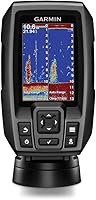
9 Best Fish Finders for Bass Boats (November 2026)
The best fish finders for bass boats include the FishPRO 2026 Upgrade for seeing how bass react to bait, the Humminbird XPLORE Series GPS Fish Finder for scanning wide flats and points, and the Lowrance Elite FS Fish Finder/Chartplotter for adding live sonar later.
On this page (4 sections)
The best fish finder for a bass boat for most anglers is the FishPRO 2026 Upgrade, because its 1080P camera shows bass in real time and how they respond to your bait. Pick the Humminbird XPLORE for wide MEGA side imaging, the Lowrance Elite FS if you plan to add live sonar, or the Deeper PRO+ 2 to scout water without wiring a console.
Bass boats ask a lot from a fish finder. You run wide flats and points at speed, then stop and pick apart a grass edge or a brush pile.
The unit has to read bottom at speed and still show a lure or a fish holding tight to cover.
That split use is why no single screen suits every bass rig. The best fish finder for a bass boat setup depends on whether you want a camera view, wide imaging, a chartplotter that grows with you, or a spare unit you can carry.
The list below covers all four jobs, from a 10-inch imaging console to a handheld unit that lives in the tackle box.
Our picks at a glance
-
1

-
2
 Best for scanning wide flats and points
Humminbird XPLORE Series GPS Fish Finder
9.4/10 our score
See it on Amazon -
3
 Best for adding live sonar later
Lowrance Elite FS Fish Finder/Chartplotter
9.3/10 our score
See it on Amazon
- 4
 Check it
Simrad GO Chartplotter and Fish Finder
Best for a simple touchscreen console - 5
 Check it
Humminbird Helix 5 CHIRP GPS G3
Best for a tight dash and a low budget - 6
 Best for reading bottom in weedy waterCheck it
- 7
 Best for scouting without a console unitCheck it
- 8
 Best for a first sonar on a small bass boatCheck it
- 9
 Check it
LUCKY Kayak Wireless Fish Finder
Best for a spare or rental bass boat
Best fish finders for bass boats compared
The FishPRO takes the top spot because it shows fish rather than returning echoes. The Humminbird and Lowrance units give you wider search and charting for bigger water.
The smaller picks handle compact dashes and temporary setups.
FishPRO 2026 Upgrade: Best for seeing how bass react to bait
- 7-inch IPS monitor
- HD 1080P camera on 82 ft cable
- 10,000mAh battery, up to 20 hours
- IR and white LED lighting
A camera unit that shows the actual fish and their reaction to your lure, with a big daylight-friendly screen and long battery life.
Pros
- IPS screen stays clear from any angle
- Two lighting modes for dark water
- USB-C charging lets you fish while charging
Cons
- No HDMI port and no video recording
- Camera needs a cable down to the water
FishPRO suits the bass angler who wants to see the bite, not just a mark on a screen. The 1080P camera on an 82 ft cable drops into a grass edge or around a dock and shows fish size, species and how they move toward your lure.
The 7-inch IPS monitor holds its view from steep angles and comes with a flip-up cover that doubles as a sunshade. A 10,000mAh battery runs up to 20 hours, and USB-C charging lets you fish while topping up.
The IR and LED button switches between black-and-white night viewing and full color. An adjustable 45, 90 or 180 degree fin lets you point the camera at open water or the bottom.
The 1.8 mm cable carries an 88 lb load rating and a 2800D aramid core, so repeated lifts over ice or structure do not fray it. The trade-off against the sonar units here is coverage: you see one spot well instead of scanning a wide flat.
The cable also has to be managed on deck. It does not record video or offer HDMI out. {{buy B0D7PDWFWT}}
Humminbird XPLORE Series GPS Fish Finder: Best for scanning wide flats and points
- MEGA Side Imaging+ with 200 ft range each side
- MEGA Down Imaging+ to 200 ft
- 10-inch touchscreen and keypad
- Built-in GPS with LakeMaster and CoastMaster VX card
A big-screen Humminbird for anglers who want to read structure far to each side of the boat and map their own spots.
Pros
- MEGA Side Imaging+ reaches 200 ft per side
- AutoChart Live maps depth, hardness and vegetation
- One-Boat Network works with Minn Kota and Cannon
Cons
- Control head only, so you add your own transducer
- Largest screen and highest mounting demand here
Humminbird's XPLORE is the pick for covering water fast. MEGA Side Imaging+ reaches 200 ft on each side and MEGA Down Imaging+ covers 200 ft below, so a long point or a channel ledge shows up in detail before you stop the boat.
The 10-inch touchscreen also takes keypad input, which helps when your hands are wet. Built-in GPS includes the Humminbird Basemap plus a LakeMaster and CoastMaster VX card for the US and Canada.
AutoChart Live maps depth contours, bottom hardness and vegetation in real time. It connects to Minn Kota trolling motors and Cannon gear through One-Boat Network, and Bluetooth adds wireless anchor control and phone notifications.
Dual Spectrum CHIRP adds fish detection and structure clarity under the boat. This is a control head only, so you supply the transducer.
It is also the biggest and most demanding unit to mount here. {{buy B0DKLWC8DL}}
Lowrance Elite FS Fish Finder/Chartplotter: Best for adding live sonar later
- 10-inch multi-touchscreen
- Active Imaging 3-in-1 transducer included
- FishReveal
- Preloaded C-MAP DISCOVER charts
A full chartplotter with side and down imaging in the box, and a clear upgrade path to ActiveTarget 2 live sonar.
Pros
- SideScan and DownScan with FishReveal included
- Ready for ActiveTarget 2 and 2 XL
- Wi-Fi, Ethernet and NMEA 2000 networking
Cons
- Live sonar costs extra
- A 10-inch unit needs console or dash space
Lowrance's Elite FS gives a bass boat a complete chartplotter in one box. The Active Imaging 3-in-1 transducer brings CHIRP, SideScan and DownScan with FishReveal, so you can see structure and fish targets in the same view.
The 10-inch touchscreen shows sonar and charts together. Preloaded C-MAP DISCOVER charts cover inland and coastal water plus Canada.
Its main advantage over the Humminbird here is the upgrade path: it is ready for ActiveTarget 2 and ActiveTarget 2 XL live sonar when you want to watch fish move around your lure. Depth reaches 1000 ft.
Wi-Fi, Ethernet and NMEA 2000 tie the boat together. Live sonar costs extra and needs its own transducer, so budget for it later.
The 10-inch display also wants real dash space. {{buy B08NPBX9D5}}
Simrad GO Chartplotter and Fish Finder: Best for a simple touchscreen console
- 9-inch multi-touch display
- 83/200 kHz HDI transducer included
- Preloaded C-MAP DISCOVER card
- Built-in GPS, Wi-Fi and NMEA 2000
A friendly touchscreen chartplotter with CHIRP and DownScan, well suited to a center console or a smaller bass rig.
Pros
- Familiar tap and pinch controls
- CHIRP and DownScan from the included transducer
- Mirrors to a phone or tablet
Cons
- Smaller screen than the Humminbird XPLORE
- Radar needs extra hardware
Simrad's GO is the easiest big-screen unit here to learn. Tap to set a waypoint, pinch to zoom a chart, and pan by dragging, all in controls that feel like a phone.
The 83/200 kHz HDI transducer is in the box and gives CHIRP sonar plus DownScan Imaging for structure and fish targets under the boat. A C-MAP DISCOVER card covers the US and Canada with vector charts, depth shading and tides.
Built-in GPS, Wi-Fi and NMEA 2000 handle navigation and networking, and the display mirrors to a phone or tablet. Bluetooth adds wireless integration on board.
The 9-inch screen is smaller than the XPLORE's 10 inches and the Elite FS's 10 inches, so side-by-side sonar and chart views get tighter. Radar needs extra hardware.
For a console that mainly needs clear charts and reliable depth, it is a calm choice. {{buy B0CXWBHTF3}}
Humminbird Helix 5 CHIRP GPS G3: Best for a tight dash and a low budget
- Dual Spectrum CHIRP sonar
- 5-inch color display
- Humminbird Basemap with 10,000+ lakes
- AutoChart Live mapping
A compact Humminbird that fits small dashes and still gives CHIRP sonar, GPS and live mapping.
Pros
- Wide and narrow CHIRP modes
- AutoChart Live builds maps as you go
- Keypad works in wet weather
Cons
- Small screen for side-by-side views
- No side imaging at this size
The Helix 5 is the fit for a bass boat with a small dash or a tight budget. Its 5-inch color screen leaves room for gauges and switches.
Dual Spectrum CHIRP offers a wide mode for coverage and a narrow mode for detail, so you can sweep a flat then drill into a brush pile. The Low-Q transducer sharpens 2D target separation.
The Humminbird Basemap covers more than 10,000 lakes plus the continental US coastline. AutoChart Live records depth contours, bottom hardness and vegetation while you run, with eight hours of built-in recording.
Softkey controls work in rain and spray. The XNT transom-mount transducer comes in the box.
The real trade-off is view size: at 5 inches, a chart and sonar split screen feels cramped. It also has no side imaging.
Use it as the main unit on a small rig or a second screen up front. {{buy B09B1NVX9V}}
JOYWEE FF688C Phiradar: Best for reading bottom in weedy water
- 3.5-inch color LCD
- 83/200 kHz dual frequency
- 2 to 240 ft depth range
- Auto zoom and bottom tracking
A basic dual-frequency unit that separates grass, sand and rock bottom, which helps when bass sit in cover.
Pros
- Dual frequency helps cut grass clutter
- Fish depth icons and alarms
- Low power draw at 100 watts RMS
Cons
- Buttons are not waterproof
- Small screen and no GPS
JOYWEE's FF688C is a plain dual-frequency sonar that handles weedy bass water well. The 83/200 kHz dual beam separates grass, sand and rock bottom, which helps when you are working a grass line and want to know what the bass are sitting against.
Depth reads from 2 to 240 ft, and auto zoom with bottom tracking keeps the bottom in view as the depth changes. Fish icons show size and depth, and alarms sound for fish and shallow water.
The 800 watt maximum output gives it punch for its size. The 3.5-inch color screen is small even by budget standards.
The buttons are not waterproof, so cover the unit when it rains or spray comes over the bow. There is no GPS or mapping.
Treat it as a simple depth and fish tool for a second boat. {{buy B071XXZK7B}}
Deeper PRO+ 2: Best for scouting without a console unit
- Castable sonar with Wi-Fi
- Wide, mid and narrow beams
- Built-in GPS and bathymetric maps
- Accuracy to 330 ft
A castable sonar you throw from the bank or the deck, with GPS mapping in a phone app.
Pros
- No boat wiring needed
- Maps save to the app
- Works from shore or a boat
Cons
- Needs a phone or tablet on the water
- No fixed screen at the console
The Deeper PRO+ 2 is the unit to cast when you do not want to wire anything. Tie it on and throw it from the bank, the dock or the deck.
Its wide, mid and narrow beams let you sweep a large area or narrow down on a single spot. Built-in GPS saves bathymetric maps to the Fish Deeper app, so you can build a picture of a flat over several trips.
Accuracy reaches 330 ft. Target separation of 0.4 in on the narrow beam helps track a jig worked vertically.
The Wi-Fi link runs without a router. The catch is that your phone or tablet becomes the screen, which means battery and glare management on the water.
It also gives you no fixed console display for running at speed. For scouting before a tournament, that trade is often worth it. {{buy B09BD7YYBJ}}
Lowrance Eagle 4x: Best for a first sonar on a small bass boat
- 4-inch IPS portrait screen
- Auto-Tuning sonar
- 200 kHz Bullet Skimmer transducer
- Twist-lock connector
A compact Lowrance that sets up fast and reads depth and fish with almost no adjusting.
Pros
- Auto-Tuning handles settings
- IPS screen stays clear in sun
- Simple twist-lock install
Cons
- No GPS or mapping
- Basic sonar only, no imaging
Lowrance's Eagle 4x suits a first-time bass boat owner who wants depth and fish without menus. Auto-Tuning sonar picks settings for you, so you spend time fishing instead of adjusting.
The 4-inch IPS portrait screen stays clear in bright sun and through polarized sunglasses. The included 200 kHz Bullet Skimmer has a broad 44-degree beam for wide coverage under a small boat.
Depth reaches 500 ft. A twist-lock connector makes the display easy to remove and store.
Fish icons show depth and zoom gives a closer look. This is basic sonar only: no GPS, no mapping and no imaging.
Against the FishPRO and the big chartplotters, it trades features for simplicity. It is a good starting screen that leaves budget for a better unit later. {{buy B0CY3K9R3F}}
LUCKY Kayak Wireless Fish Finder: Best for a spare or rental bass boat
- Wireless castable sonar
- 3.5-inch handheld LCD
- 90 degree beam
- 3 to 147 ft depth range
A handheld wireless unit you can carry on and off any boat, with no drilling or wiring.
Pros
- No installation needed
- Handheld display with fish depth icons
- Works from shore, kayak or boat
Cons
- Shortest depth range here
- Display and sensor both need battery care
LUCKY's wireless finder is the one to keep in the tackle box for a spare or rental bass boat. The castable sensor sends to a handheld 3.5-inch LCD with a 90-degree beam, reading from 3 to 147 ft.
Fish icons carry depth numbers, so you can see how deep fish sit next to structure. The horizontal screen scrolls right to left to show what just passed under the sensor.
There is no drilling and no wiring, so it moves on and off the boat in seconds. A safety tether keeps the sensor tied to your line.
The short depth range and small screen are the limits: it is not a unit for running a big flat at speed. Use it to check a pond, a rental, or a spot you cannot reach from the bank. {{buy B0FYWTWVT7}}
How these fish finders were compared
We compared each unit on the specs that matter for bass boats: screen size and type, depth range, sonar or imaging type, mapping and networking, and how it mounts or carries. The score weighs those specs against what a bass angler actually needs, from casting to a brush pile to running a long flat.
We did not run these units on the water. The scores come from the maker's published specs and the job each unit is built to do.
A big chartplotter with imaging earns points for search and charting, while a simple unit earns its place for ease and price tier. The winner, the FishPRO, earns its top score because it shows fish and their reaction to bait rather than just returning echoes.
Which fish finder fits your bass boat console?
Start with your dash. A 10-inch unit needs room and a solid mount; a 5-inch or 4-inch unit fits where gauges and switches crowd the panel.
Measure the opening and the clearance behind it before you pick a screen size.
Then decide what you want to do with the screen. If you read structure at speed, imaging and a chart matter more than a camera.
If you stop and pick apart cover, a camera view or a compact sonar unit gets you fishing faster.
Do you need imaging or a camera?
Side imaging searches wide, so it suits anglers who cover long flats and points. The Humminbird XPLORE gives 200 ft to each side.
A camera shows the fish and the bait up close, but only in the spot the cable reaches. For clear, shallow bass water, the FishPRO view is hard to beat.
For murky water, imaging usually tells you more. The FishPRO's LED mode also switches to full color when light allows, which helps identify fish size.
How much screen can your dash hold?
A 7-inch screen like the FishPRO's fits many bass dashes. A 10-inch display, like the XPLORE and Elite FS, is easier to read at speed but needs more space.
On a compact rig, the 5-inch Helix 5 or the 4-inch Eagle 4x keeps the dash usable. Check clearance for cables and the bracket as well as the screen.
A gimbal bracket lets you angle the screen toward you, which helps when the console sits low.
Will you add live sonar later?
If live sonar is on your wish list, buy a unit that is already ready for it. The Lowrance Elite FS supports ActiveTarget 2 and ActiveTarget 2 XL, so you can add forward-facing sonar without replacing the display.
A basic unit like the Eagle 4x or the FF688C has no such path. Plan the upgrade before you spend on a screen.
Live sonar also needs its own transducer and mounting, so leave room in the budget.
Do you want a unit you can move between boats?
A castable or portable unit travels with you. The Deeper PRO+ 2 and the LUCKY finder need no wiring and run from a phone app or a handheld screen.
Fixed units stay bolted to the boat, which suits one rig but not a fleet. If you fish a club boat or a rental, a portable unit earns its keep.
A fish finder for beginners is a good place to start with portable options. For the wireless type, weigh the operation range and how you will charge the sensor between trips.
The LUCKY's 853 ft wireless range means you can stand well back from the sensor on a big deck.
How does hull size change the choice?
A short hull sits lower and turns tighter, so a compact screen and a short-cable unit work well. On a 14-foot aluminum boat, the same compact logic applies; our guide to the best fish finder for a 14 foot aluminum boat covers mounting and power.
A pontoon offers more dash room and a steadier ride, so a bigger screen makes sense there; see the best fish finder for a pontoon boat. On rivers with current and snags, the best fish finder for river fishing guide covers reading moving water.
A bass boat sits between these: short enough to need a compact screen, fast enough to reward wide imaging when you are running a flat. The FishPRO's magnetic spool system also lets you separate the monitor from the cable spool, so you can set the screen on the deck and handle the camera from the side.
Does a bass boat need a chartplotter?
Not always. If you fish the same lake and know the contours, a sonar-only unit like the Eagle 4x covers depth and fish.
A chartplotter earns its place when you fish new water, run at night or want to mark and return to spots. Built-in GPS and preloaded charts, as on the Simrad GO and the XPLORE, save time on unfamiliar lakes.
Waypoints matter most in tournament fishing, where you return to the same brush pile or ledge on a second day. Networking like NMEA 2000 also lets the unit share data with a trolling motor, so you can hold a spot without dropping an anchor.
Verdict: the best fish finder for a bass boat
The FishPRO 2026 Upgrade is the best fish finder for a bass boat for most anglers, because it shows the fish and how they react to your bait in clear color. Choose the Humminbird XPLORE if you cover wide flats and want MEGA side imaging.
Pick the Lowrance Elite FS if live sonar is in your future, or the Simrad GO for an easy touchscreen console. A small dash calls for the Helix 5, weedy water suits the JOYWEE FF688C, and a spare or rental boat is served by the Deeper PRO+ 2 or the LUCKY finder.
Match the screen to your dash and the job to your water, and the best fish finder for your bass boat setup will pay for itself in time on the fish.
Our top 3 picks at a glance
-
1
-
2
Best for scanning wide flats and points
Humminbird XPLORE Series GPS Fish Finder
9.4/10 our score
See it on Amazon -
3
Best for adding live sonar later
Lowrance Elite FS Fish Finder/Chartplotter
9.3/10 our score
See it on Amazon
Frequently asked questions
Do I need side imaging for bass fishing?
No, but it helps on wide flats, points and channel edges where bass spread out sideways from the boat. A unit with only down-looking sonar still finds fish directly under the transducer.
Side imaging adds search width, which saves time when you are covering big water.
Can a fish finder run off a bass boat's main battery?
Most boat-mounted units are wired to the boat's 12V supply. Smaller units draw little power, while big-screen units with imaging use more.
A dedicated electronics battery keeps the starting battery fresh.
Check the unit's power cable and fuse needs before mounting.
Is a camera fish finder good for bass fishing?
It is useful in clear, shallow water where you can see how bass react to a bait. The FishPRO camera reaches 82 ft with a 1080P picture.
In very murky water, sonar often tells you more about depth and structure than a camera does.
What screen size works best on a bass boat?
A 7-inch screen fits most bass boat dashes and still shows sonar and a chart together. A 10-inch screen is easier to read at speed but needs more mounting room.
On a compact rig, a 5-inch unit like the Helix 5 keeps the dash clear.
Can I move one fish finder between boats?
Yes, if you choose a portable or castable design and keep the transducer and cabling tidy. Fixed units mounted at the console are harder to move because the wiring and bracket stay with the boat.
A handheld or castable unit travels in a tackle bag.