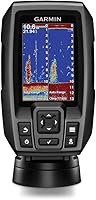
Fish Finders for Kayaks Freshwater: How to Choose
Start with a castable wireless sonar if you paddle a sit-on-top kayak and want GPS. Pick a fixed-mount display if you fish deep water regularly. Match depth range and beam width to the lakes you fish, not to the biggest numbers in the catalog.
On this page (8 sections)
- What makes a fish finder work well from a kayak?
- How much depth range do freshwater kayak anglers actually need?
- Does GPS matter for kayak fishing in freshwater?
- Wide beam or narrow beam for weedy freshwater flats?
- Should you mount a fixed display or go fully castable?
- What do the three main options cost you in real use?
- How do you read a kayak sonar screen in freshwater?
- Which fish finder should a freshwater kayak angler buy?
The best fish finders for kayaks freshwater are castable wireless sonar units with built-in GPS, because they need no drilling and read depth wherever you throw the sensor. A fixed-mount unit makes sense once you fish the same deep lake every week and want a permanent screen in front of you.
Kayaks sit low to the water, so a castable sensor gives you a much better look ahead than a hull transducer that only sees straight down. That difference matters most on weedy flats and steep reservoir banks.
This guide covers what actually separates one unit from another for paddlers, then names the three we would pick. For the wider field, see our roundup of the best portable fish finders for kayaks.
What makes a fish finder work well from a kayak?
A kayak unit needs three things: a sensor you can deploy without drilling, a screen you can read in daylight, and a depth rating above your lake's deepest hole. Everything else is comfort.
Sit-on-top hulls leave little room for a bracket and cable. A castable sensor floats, ties to a tether and sends sonar to your phone or a small display.
That is the setup most paddlers land on first.
Weight matters when you carry the boat alone. The Deeper PRO+ 2 sensor weighs 3.2 ounces and disappears into a tackle bag.
A handheld display of around 0.7 kg is light enough to sit in a rod holder or rest between your legs.
Battery life sets your trip length. Garmin rates the Striker Cast at 10+ hours, enough for a dawn to dusk paddle.
USB charging from a power bank lets you top up between sessions without buying spare cells.
Then there is the display question. A phone screen is bright and large but drains its own battery.
A dedicated LCD display keeps your phone free for photos and maps.
Decide on castable or fixed first, because that choice shapes everything else.
How much depth range do freshwater kayak anglers actually need?
147 ft covers nearly every freshwater kayak fishery, but 200 ft and beyond gives useful headroom on deep reservoirs. Buy for the water you fish, not the number on the box.
Most kayak anglers work weed beds in 3 to 20 ft, drop-offs in 20 to 50 ft and the odd basin past 60 ft. A unit rated to 147 ft handles that easily.
Deeper mountain lakes and some river impoundments run past 100 ft.
The depth figure describes the sensor's maximum measuring depth, not the water it will read in every condition. A wide beam loses bottom lock in deep water sooner than a narrow beam.
A castable sensor only measures where it lands. If you cast 40 ft out, you read 40 ft out.
That is a feature on the kayak, since you sample structure ahead of the boat instead of only beneath it.
Garmin rates the Striker Cast to 200 ft and streams wirelessly from up to 200 ft. It also runs traditional 2-D and ice flasher modes, so the same unit carries into winter.
The Deeper PRO+ 2 measures to 100 meters, roughly 328 ft. That is more depth than any kayak angler needs on a typical lake, and it leaves room for steep basin edges.
Match the rating to your deepest local hole, then stop paying for range you will never reach.
Does GPS matter for kayak fishing in freshwater?
GPS earns its place on lakes with repeating structure, because it lets you mark a rock, hump or weed edge and return to it on the next trip. On a small pond you can find your spot by eye, so GPS matters less.
Built-in GPS also supports bathymetric mapping. You paddle or cast over water and the unit builds a depth map you can keep.
Over a few trips you end up with a contour picture of your home lake.
That changes how you plan. Instead of hunting the same drop-off from memory, you tap a saved waypoint and paddle straight to it.
It also helps when the wind pushes you off a line.
The Deeper PRO+ 2 saves its maps to the Fish Deeper app. Garmin's Striker Cast builds maps with 1 ft contours through Quickdraw Contours and lets you download community maps to your device.
Not every kayak angler needs this. If you fish one small lake and know every stump, skip GPS and spend the savings on a better beam or battery.
If you fish water bigger than you can paddle end to end in a day, choose GPS.
Wide beam or narrow beam for weedy freshwater flats?
A wide beam finds fish faster; a narrow beam pinpoints them. Selectable beams let you do both without carrying two units, and that flexibility is worth having.
A wide beam sweeps more water per cast. That helps when you scan a flat for schools or check a bay quickly.
The trade-off is softer target separation, so individual fish blur together.
A narrow beam concentrates the signal. Target separation gets sharp, and you can tell a fish from a branch or a jig from the bottom.
Vertical jigging under the kayak is where this pays off.
The Deeper PRO+ 2 offers wide, mid and narrow beams. Deeper states target separation of 0.4 in on the narrow beam and 1 in on the wide and mid beams.
That is the kind of detail that separates a unit aimed at serious anglers from a basic depth reader.
The LUCKY unit scans a wide 90 degree beam over a 3 to 147 ft depth area. That is a scanning beam rather than a selectable one, which suits searching open water and weed edges.
Choose a unit with selectable beams if you fish both open flats and tight structure.
Should you mount a fixed display or go fully castable?
Go fully castable if you want no holes in your hull. Choose a fixed display when you fish long days and want the screen always in view without reaching for a phone.
A castable unit lives in your tackle bag and moves between boats. That is the appeal for anyone who paddles a rental, a borrowed kayak or several different hulls.
A fixed display gives you a permanent readout. You wire a transducer to the hull or a transom arm and a screen sits within reach.
The install takes an afternoon and some planning.
If you go that route, read our guide on how to mount a fish finder on a kayak before you drill. Placement, cable routing and transducer angle all change what you see.
Beginners usually do better with castable gear. Fewer install steps means more time fishing, and you learn to read sonar without worrying about a bad mount skewing the picture.
Our fish finder for beginners guide covers that first purchase.
The LUCKY unit splits the difference. It comes as a handheld display plus a floating castable sensor, so you get a dedicated screen without drilling the hull.
Pick castable for flexibility and fixed for a permanent cockpit.
What do the three main options cost you in real use?
Each of these units asks for a different trade: more mapping and beam control, easier phone pairing, or a dedicated handheld screen. The right one depends on how you fish, not on which has the longest feature list.
Deeper PRO+ 2: best for serious anglers who want mapping and beam control
The Deeper PRO+ 2 suits the angler who treats a kayak as a fishing platform and wants bathymetric maps of every lake. It is the most capable unit here for reading structure.
Its three beam options let you scan wide, then tighten down on a mark. Deeper states a maximum depth of 100 meters and Wi-Fi connectivity for linking to the app.
The unit weighs 3.2 ounces, so it disappears into a tackle box.
Maps save to the Fish Deeper app, which means your lake knowledge travels with your phone. That is the feature that sets it apart from a plain depth reader.
The screen is your phone, so plan charging around a full day.
Choose the PRO+ 2 if mapping and selectable beams matter more than a dedicated display.
Garmin Striker Cast with GPS: best for phone-first paddlers who want simple pairing
The Garmin Striker Cast suits the paddler who already runs maps and fishing apps on a phone and wants one more stream on that screen. Setup is download, pair and fish.
Garmin says the unit streams wirelessly from up to 200 ft and reads to 200 ft deep. It runs traditional 2-D and ice flasher modes, so the season does not end when the lake freezes.
The internal USB-rechargeable battery lasts 10+ hours according to Garmin.
It powers on when floating in water and turns off when you lift it out. That saves battery on a long paddle and removes a switch to forget.
Water resistance is rated IPX6 and IPX7.
Quickdraw Contours builds 1 ft contour maps, and the Quickdraw Community lets you download maps others have made. That is a lot of mapping for a castable unit.
Choose the Striker Cast if you fish from a phone and want GPS with contour maps.
LUCKY Kayak Wireless Fish Finder: best for a dedicated screen without drilling
The LUCKY MT-202 suits the angler who wants a real display in the kayak but will not drill the hull. It pairs a handheld screen with a floating castable sensor.
Its 3.5 in horizontal LCD shows fish icons with depth numbers right beside them. The screen scrolls right to left, so you see a history of what passed under the sensor.
That helps you track a school or a structure edge as you paddle.
The kit weighs about 0.7 kg. The sensor ties to your line or the included tether and casts like a bobber.
LUCKY states a 3 to 147 ft depth area and a 90 degree beam.
It works across shore, kayak, canoe and ice fishing, so one unit covers your year. The lack of GPS and contour mapping is the real trade against the other two.
Choose the LUCKY if you want a screen in the boat and no holes in the hull.
How do you read a kayak sonar screen in freshwater?
Treat the screen as a moving picture, not a snapshot. The right edge is what is under the sensor now; the left edge is history.
Read from right to left as you drift or paddle.
Bottom shows as a thick band that thickens with hard substrate and thins over mud. A double echo below it usually means hard bottom.
Fish show as arches when the boat moves over them and as blobs when you sit still.
Weeds read as fuzzy vertical growth off the bottom. Structure like rock piles and timber shows as hard returns with sharp edges.
Learn your home lake's signature shapes before chasing marks.
Set gain so the bottom line is solid without filling the screen with noise. Too much gain turns weed tops into false fish marks.
Too little hides small fish near structure.
If you are new to sonar altogether, our explainer on what is a fish finder used for covers the basics of depth, structure and fish returns.
Read the screen at a steady pace and you will learn more in one trip than from any manual.
Which fish finder should a freshwater kayak angler buy?
The Deeper PRO+ 2 is the pick for most serious kayak anglers, because its selectable beams, built-in GPS and bathymetric mapping cover the widest range of freshwater situations. It reads to 100 meters and saves every map to the Fish Deeper app.
Choose the Garmin Striker Cast instead if you want the simplest phone pairing and 1 ft contour mapping with 10+ hours of battery. It is the easier unit to hand to a friend or move between boats.
Pick the LUCKY MT-202 if a dedicated handheld screen matters more than GPS. It keeps your phone free and casts like a bobber with a wide 90 degree beam.
Whatever you choose, match depth range and beam type to your home water before you buy. A modest unit set up well beats a feature-heavy one you never learn to read.
For more comparisons across the category, browse our paddle craft sonar coverage and start with the portable units.
Frequently asked questions
Do I need GPS on a fish finder for kayak fishing in freshwater?
GPS helps on freshwater lakes and reservoirs because it lets you return to a marked rock, weed edge or drop-off without guessing. It also supports bathymetric mapping so you can build a picture of a lake over several trips.
A castable unit with built-in GPS gives you that without drilling your hull.
How deep does a kayak fish finder need to reach in freshwater?
Most freshwater kayak anglers work in 3 to 60 ft, so a unit rated to 147 ft or more leaves headroom. Deeper basins and some reservoirs go past 100 ft.
Match the rating to your home water, and remember that a castable unit reads depth only where its sensor lands.
Can I use a wireless fish finder on a sit-on-top kayak?
Yes, and it is the simplest setup. Tie the floating sensor to a line or tether, cast it ahead of the kayak and read the sonar on your phone or handheld display.
There is no drilling and no cable to route through the hull, so you can move the unit between boats.
What beam width is best for freshwater kayak fishing?
A narrow beam gives sharper target separation and reads deeper, which suits jigging and structure fishing. A wide beam covers more water per cast and helps when you scan open flats.
A unit with selectable beams lets you switch between the two as the water changes.
Will a fish finder work through a kayak hull?
Some fixed transducers read through a thin hull when mounted in a wet well of water or a bed of silicone. It depends on hull material and thickness.
A castable or transom-mounted sensor avoids the question entirely, which is why many kayak anglers start there.
How do I keep a castable fish finder from snagging in weeds?
Cast past the weed edge and reel toward it, not into the thickest cover. Keep the tether short and retrieve steadily so the sensor skims over the tops of the weeds instead of sinking into them.