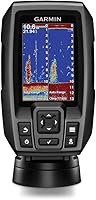
9 Best Fish Finders Under $600 (November 2026)
The best best fish finders under 600 dollars include the FishPRO 2026 Upgrade HD 1080P Underwater Camera for seeing fish react to your bait, the TMACTIME 1080P HD Underwater Camera for packing light on a kayak, and the ReelSonar iBobber for shore and dock fishing.
On this page (8 sections)
- The best fish finders under 600 dollars
- How these fish finders compare
- How we chose the best fish finder under 600 dollars
- Which type of fish finder fits how you fish?
- What depth range do you actually need?
- Does a fish finder under 600 dollars include GPS and mapping?
- Should you spend more or less within this budget?
- The verdict on the best fish finder under 600 dollars
The best fish finder under 600 dollars for most boat owners is the Humminbird Helix 5 CHIRP GPS G3, which puts CHIRP sonar, GPS and AutoChart Live mapping in one console unit. If you fish without a boat, a castable sonar like the iBobber does more for the money.
This guide covers nine fish finders that land under 600 dollars and range from castable phone sonar to full boat units and underwater cameras. Each one suits a different kind of fishing, so the right pick depends on where you fish, not just what it costs.
If you're new to sonar, our guide to the best fish finders for beginners explains what the screen is telling you. For moving water, see the picks in our best fish finders for river fishing.
Our picks at a glance
-
1
 Best for seeing fish react to your bait
FishPRO 2026 Upgrade HD 1080P Underwater Camera
9.6/10 our score
See it on Amazon -
2
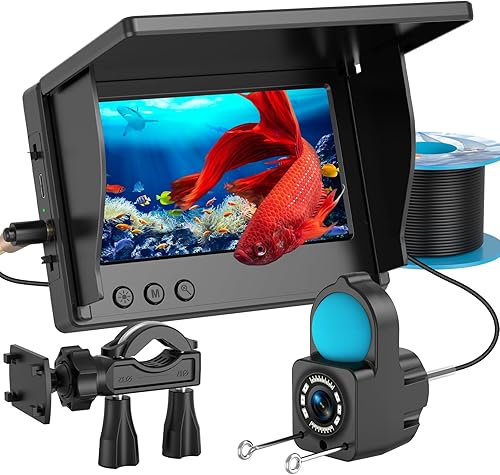 Best for packing light on a kayak
TMACTIME 1080P HD Underwater Camera
9.4/10 our score
See it on Amazon -
3
- 4
 Check it
Humminbird Helix 5 CHIRP GPS G3
Best for boat fishing with mapping - 5
 Check it
LUCKY Portable Handheld Fish Finder
Best for a low-cost boat and kayak setup - 6
 Best for dual-frequency lake fishingCheck it
- 7
 Best for ice fishingCheck it
- 8
 Best for small boats and limited dash spaceCheck it
- 9
 Best for casting from a bank without electronicsCheck it
The best fish finders under 600 dollars
The Humminbird Helix 5 is the strongest all-round pick for a boat, while the other units win on portability, camera detail or a specific fishing style. Match the unit to how you fish before comparing extra features.
FishPRO 2026 Upgrade HD 1080P Underwater Camera
FishPRO 2026 Upgrade HD 1080P Underwater Camera: Best for seeing fish react to your bait
- 7-inch IPS monitor
- True 1080P camera
- 10,000mAh battery, up to 20 hours
- 82 ft cable with 88 lb tensile strength
- IR and LED lighting modes
A 7-inch IPS screen shows a live color view of the bottom so you can judge fish size and how they respond to a lure. The magnetic spool lets you run the monitor and cable separately.
Pros
- Live color view instead of sonar marks
- Up to 20 hours per charge
- Switch between IR and LED light with one button
Cons
- No video recording and no HDMI port
- Needs a separate mount or tripod for a fixed view
The FishPRO suits an angler who wants to see what is actually happening below the boat. Its 7-inch IPS screen shows live color video from a true 1080P camera, so you can gauge fish size and species and watch them react to a lure.
IPS panels hold color and contrast from wide angles, while budget TN panels fade when you view from above.
The 10,000mAh battery runs up to 20 hours, and USB-C charging lets you fish while plugged into a power bank, so a long tournament day does not end early. IR gives a black-and-white view in low light, and LED shows full color.
One button switches between them, and the 2026 monitor shows which light is active.
The camera has a 45, 90 or 180-degree fin so you can aim it at the bottom or out to the side. The magnetic spool lets you run the monitor and the 82 ft cable separately, and the 1.8 mm cable carries an 88 lb rating thanks to its Aramid core.
The camera itself does not record video and has no HDMI port, so this is a live-viewing tool. The JOYWEE and Humminbird cover wider water faster, but neither shows you what the fish are doing.
TMACTIME 1080P HD Underwater Camera
TMACTIME 1080P HD Underwater Camera: Best for packing light on a kayak
- 4.3-inch LCD screen
- 1080P camera
- 6 infrared lights
- IP68 waterproof to 15 m
- 5000mAh battery, up to 10 hours
A compact camera and monitor set that shows live underwater video in daylight or with infrared light. The smaller screen and battery suit short trips more than all-day sessions.
Pros
- Light and small enough for a kayak
- Infrared lights help in low light
- IP68 rated camera and cable
Cons
- Live viewing only, no recording
- Shorter battery life than the FishPRO
TMACTIME suits a paddler or ice angler who wants a camera kit that packs into a small bag. The 4.3-inch screen and camera weigh about a pound together, and the IP68 camera and cable handle depths to 15 m with a 100 kg load rating.
That is enough cable for most kayak and shallow lake work, and the load rating means the camera survives being hauled up through ice.
Six infrared lights keep the view usable at night or in murky water, and the autofocus lens sharpens as the camera settles. The 5000mAh battery runs about 10 hours, which covers a solid fishing day but not the multi-day trips the FishPRO can manage.
The screen is small enough that you will lean in for detail, and there is no sunshade built in.
This is a live-viewing camera with no recording. Choose it over the FishPRO when portability comes first.
Choose the FishPRO instead if you want the larger screen, the longer cable or the two-tone lighting switch for dark water, or if you want the wider viewing angle the adjustable fin gives you.
ReelSonar iBobber
ReelSonar iBobber: Best for shore and dock fishing
- Castable sonar
- 135 ft depth range
- 10+ hours battery life
- Bluetooth app with trip log
- Fish and strike alarms
A castable sonar you throw from shore, a dock or a kayak. The app maps the bottom, logs spots and sounds an alarm when fish gather below.
Pros
- Works without a boat
- Free app logs depth, temperature and spots
- Alarms help when you look away
Cons
- Needs a phone within Bluetooth range
- Displays fish as icons rather than video
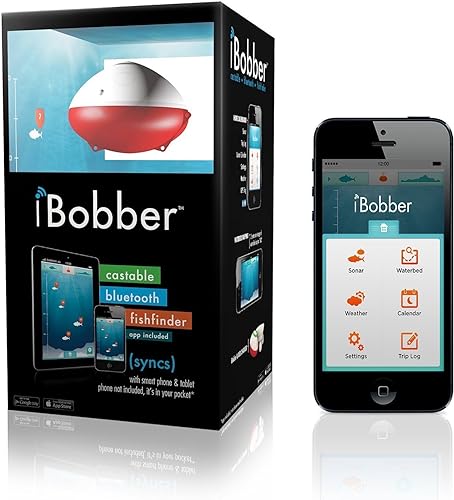
The iBobber suits bank and dock anglers who fish water they cannot reach with a boat unit. It's a castable sonar that pairs over Bluetooth with a free app on your phone or tablet, and the app works up to 100 ft away.
At roughly the size of a small puck, it fits in a tackle box.
Depth readings reach 135 ft, and the app logs depth, water temperature and spots with a trip log. Fish appear as depth-tagged icons color coded by size, so you can see whether the marks below are panfish or something bigger.
The fish and strike alarms help when your eyes are on the rod, and the LED beacon makes the puck easier to spot on the water in low light.
Its strength is reach without a boat. Against the Deeper Start it reads deeper water and adds alarms.
Against the Humminbird it trades mapping and CHIRP detail for the ability to fish anywhere you can cast, with no wiring and no console.
Humminbird Helix 5 CHIRP GPS G3
Humminbird Helix 5 CHIRP GPS G3: Best for boat fishing with mapping
- Dual Spectrum CHIRP sonar
- Built-in GPS and Humminbird Basemap
- AutoChart Live mapping
- 10,000+ lakes mapped
- Keypad controls
A boat console unit with CHIRP sonar and GPS in one box. It shows fish arches and structure, then builds depth-contour maps of the water you actually fish.
Pros
- Sonar and GPS in one unit
- AutoChart Live maps new water
- Transom transducer included
Cons
- No side imaging at this price
- Wiring to the boat takes more setup than a castable unit
This is the unit to pick if you fish from the same boat most weekends. Dual Spectrum CHIRP sonar shows fish arches and structure, with a wide mode for coverage and a narrow mode for detail.
The low-Q transducer helps separate targets close to the bottom, which is where a lot of fish sit.
Humminbird Basemap covers 10,000+ lakes and the continental U.S. coastlines. AutoChart Live builds depth-contour, bottom-hardness and vegetation maps of the water you actually fish, with eight hours of built-in recording, and Zero Line SD cards extend the mapping capacity later.
LakeMaster, CoastMaster and Navionics charts are compatible if you want more detail.
The 5-inch color TFT and keypad controls are built for weather and gloves, and the gimbal bracket lets you angle the screen. The box includes the transom-mount transducer and power cable, but you still wire it to the boat, so it's more setup than a castable puck.
For the reader who wants mapping above all, see our best fish finders with GPS.
LUCKY Portable Handheld Fish Finder
LUCKY Portable Handheld Fish Finder: Best for a low-cost boat and kayak setup
- 2.4-inch color LCD
- 328 ft depth range
- 45-degree beam at 200 kHz
- Water temperature display
- Rechargeable, about 5 hours
A wired handheld sonar with a small screen and a transducer you clamp to a boat or kayak. It reports depth, temperature and fish size and depth.
Pros
- Long depth range for the size
- Shows fish size and depth
- USB rechargeable
Cons
- Short battery life
- Small screen
The LUCKY suits a kayak or small boat angler who wants sonar on a tight budget. A 2.4-inch color LCD reports depth, water temperature, and fish size and depth, with a 45-degree beam at 200 kHz.
That beam is wider than a narrow deep-water cone, which suits the shallower water a kayak usually fishes.
Depth detection reaches 328 ft, which is a long range for a handheld. The bracket clamps the transducer to a boat or kayak, and the wired connection keeps the signal steady without pairing.
Sensitivity, depth range, zoom, alarms, units and language are all adjustable, and a simulation mode lets you learn the menus before you launch.
The trade-off is the small screen and roughly 5 hours per charge. It shows less detail than the Helix 5 and has no GPS.
It still gives you depth and fish marks on a kayak where a wired console unit is awkward, and the rechargeable battery means no spare cells to carry.
JOYWEE FF688C Phiradar
JOYWEE FF688C Phiradar: Best for dual-frequency lake fishing
- 3.5-inch color TFT
- 200 kHz and 83 kHz dual beam
- 240 ft depth range
- Auto and manual zoom
- Fish and depth alarms
A boat-mounted unit that runs two sonar frequencies so you can switch between a wide view and a narrow one. Auto zoom and bottom tracking keep the bottom in view.
Pros
- Two sonar frequencies
- Auto zoom bottom tracking
- Audible fish and depth alarms
Cons
- Buttons are not waterproof
- Runs on the boat's DC power
The JOYWEE suits lake and river anglers who want two sonar views from a compact boat unit. It runs 200 kHz and 83 kHz, so you can switch between a wide beam and a tighter one.
That helps separate fish from grass in shallow, weedy water, where a single frequency can get noisy.
The 3.5-inch 18-bit TFT stays readable in sunlight, and depth reads from 2 to 240 ft in 1/10th precision. Auto zoom bottom tracking keeps the bottom locked on screen, and stop-chart freezes a view when you find something worth marking.
It reads bottom type too, so you can tell grass, sand and rock apart.
Big and small fish icons with depth help quick reads, and the depth alarm can be set between 3 and 99 ft. It runs on the boat's DC power, and the buttons are not waterproof, so keep the console dry.
Against the Humminbird it trades GPS for a lower-cost dual-frequency sonar.
Hawkeye FishPod 5x
Hawkeye FishPod 5x: Best for ice fishing
- Bluetooth sonar
- AI-tuned operating modes
- FishEcho size and depth tuning
- Vertical flasher
- 199 ft depth range
A small castable sonar that pairs with a phone app and includes a vertical flasher mode. The flasher view helps when you fish straight down through a hole.
Pros
- Vertical flasher made for ice fishing
- Four preset modes do the tuning
- Mounts to standard brackets
Cons
- App-based display
- No GPS mapping
The FishPod 5x suits ice anglers and anyone who fishes straight down from a dock. Its vertical flasher view amplifies recent sonar echoes, which makes it easier to track a jig and a fish in the same water column.
On ice, that flasher read is how you know a fish is rising to your lure.
Four preset modes tune the screen to target fish by size, depth or schooling. FishEcho handles clutter, debris and false echoes, and BottomScan reads bottom composition so you can tell vegetation from hard and soft seabed.
Depth reaches 199 ft, and the TraxNut mount fits any 1/4 x 20 bracket, so it works on a rod holder or a tripod.
It connects over Bluetooth to an app, so there is no screen on the puck itself. The Deeper Start is the simpler castable, but the FishPod's flasher and preset modes are built for ice.
Pick it if the hole, not the open water, is your main spot.
Lowrance Eagle 4x
Lowrance Eagle 4x: Best for small boats and limited dash space
- 4-inch IPS portrait screen
- Auto-Tuning sonar
- 200 kHz Bullet Skimmer transducer
- 44-degree beam
- Up to 500 ft depth
A compact portrait unit that fits a tight dash or a small boat helm. Auto-Tuning sets the sonar for the water so you spend less time on menus.
Pros
- Screen readable through polarized glasses
- Auto-Tuning sonar
- Fast twist-lock connector
Cons
- No GPS in this base model
- Smallest display here
The Eagle 4x suits a small boat, kayak or dash where space is the limiting factor. Its 4-inch IPS portrait screen stays clear in sunlight, from wide angles and through polarized sunglasses, and the compact shape fits a tight helm.
A portrait screen stacks the depth readout above the sonar view, which suits a narrow dash.
Auto-Tuning sonar picks settings for the water, so you spend the trip fishing, not digging through menus. The included 200 kHz Bullet Skimmer sends a broad 44-degree beam, which covers a wide patch below the boat and suits the shallow water kayaks and small boats fish most often.
Fish show as icons with depth, and zoom gives a closer look without an audible alarm.
Depth reads to 500 ft, and the twist-lock connector lets you pull the display off quickly. There's no GPS on this version, so it is a sonar-first unit.
Choose the Humminbird instead if you want mapping, and this one if the dash is short.
Deeper Start
Deeper Start: Best for casting from a bank without electronics
- Castable Wi-Fi sonar
- 165 ft cast and depth range
- 40-degree beam
- Free Fish Deeper app
- 6 hours battery, 2.5-hour charge
A castable sonar with its own Wi-Fi signal, so it does not use your mobile data. The app shows fish, depth and bottom contour for shore and kayak anglers.
Pros
- Runs its own Wi-Fi
- Saves every scan with time and location
- Night fishing mode
Cons
- Shorter depth range than the iBobber
- Needs the app for every reading
The Deeper Start suits a shore or family angler who wants sonar without electronics on the boat. It casts out to 165 ft and reads to the same depth with a 40-degree beam.
The free Fish Deeper app shows fish, depth, bottom contour and vegetation.
It runs its own Wi-Fi, so it does not eat your mobile data, and every scan saves with time and location for an easy return. A full charge takes 2.5 hours and runs about 6 hours, with a night fishing mode for evening trips.
The compact body is light enough to cast on a normal rod, with no wires or external batteries to fiddle with.
Choose it over the iBobber if you mostly fish shallower water and want the simplest app setup. Choose the iBobber if you want deeper reads and alarms.
Either way you need your phone on the water.
How these fish finders compare
The table lines up screen, depth range and power across all nine, so you can see where each one fits. Prices move, but every unit here sits under 600 dollars.
| Product | Best for | Display | Max depth | Power | Our score |
|---|---|---|---|---|---|
| FishPRO 2026 Upgrade HD 1080P Underwater Camera | seeing fish react to your bait | 7-inch IPS | 82 ft | 10 | 9.6 |
| TMACTIME 1080P HD Underwater Camera | packing light on a kayak | 4.3-inch LCD | 15 m | 5000mAh | 9.4 |
| ReelSonar iBobber | shore and dock fishing | Rechargeable | 9.1 | ||
| Humminbird Helix 5 CHIRP GPS G3 | boat fishing with mapping | 5-inch color TFT | 8.8 | ||
| LUCKY Portable Handheld Fish Finder | a low-cost boat and kayak setup | 2.4-inch color LCD | 328 ft | 8.6 | |
| JOYWEE FF688C Phiradar | dual-frequency lake fishing | 3.5-inch TFT | 8.6 | ||
| Hawkeye FishPod 5x | ice fishing | 8.0 | |||
| Lowrance Eagle 4x | small boats and limited dash space | 4-inch IPS | 500 ft | 7.6 | |
| Deeper Start | casting from a bank without electronics | 6 hours | 7.2 |
How we chose the best fish finder under 600 dollars
We compared the specs, features and what each unit is built to do, and scored each one against how people fish with it. Our score weighs specs, features and buyer feedback against what you're shopping for.
We started with the use case. A boat console unit needs sonar detail and easy wiring, while a castable puck needs range and a clean app.
A camera needs a clear screen and enough battery for a full day.
A camera also needs a cable strong enough to take repeated lifts, which is why the FishPRO's 88 lb rating matters on ice.
Then we checked the numbers that matter on the water: depth range, beam angle, screen size and type, power source and battery life. A 7-inch IPS screen is easier to read in sun than a 2.4-inch LCD, and an 82 ft cable suits deep water that a 15 m cable does not.
Frequency tells you how the unit reads: 83 kHz for a wider view, 200 kHz for tighter detail, and both together on the JOYWEE.
Finally, we looked at what each unit leaves out. GPS, mapping, recording and a transducer are not on every model, so we flagged them where they change how you fish.
The result is a list where every pick earns its place for a specific angler.
Which type of fish finder fits how you fish?
Boat anglers get the most from a console unit with sonar and GPS, while shore and kayak anglers do better with castable sonar or a camera. Decide by platform first, then by features.
Do you fish from a boat, a kayak or the bank?
A fixed boat console suits a Humminbird or Lowrance because it runs off the boat's power and shows sonar while you move. A kayak favors a compact unit like the LUCKY or the TMACTIME camera that clamps on or packs away.
Bank and dock anglers should start with a castable unit like the iBobber or Deeper Start, since they can reach water no boat can.
Is sonar or video more useful to you?
Sonar covers huge water fast and finds the fish and the structure. An underwater camera shows how a fish reacts to your bait, which sonar marks alone cannot.
The FishPRO and TMACTIME are the video picks. The Helix 5, JOYWEE and Eagle 4x are the sonar picks.
Many anglers use one to find a spot and the other to check it.
Where will the unit actually sit on your boat?
On a small boat, mounting space decides as much as specs. A 4-inch portrait unit like the Eagle 4x fits a tight helm, while a 7-inch screen like the FishPRO's needs a flat surface or its own mount.
The Humminbird uses a gimbal bracket, and the JOYWEE mounts flush. Measure the dash before you buy the screen.
Which power source suits your trip?
Mains and DC units like the JOYWEE and Helix 5 run off the boat, so they never run flat but need wiring. Battery units like the LUCKY and the two cameras go anywhere but stop when the charge does.
On ice, the 20-hour FishPRO or the flasher on the FishPod earns its keep more than a wired console.
What depth range do you actually need?
Match the depth range to the water you fish most. A 135 ft castable sonar covers most lakes and rivers, while a boat unit at 500 ft handles deep reservoirs.
Most inland fishing happens in less than 100 ft of water, so the iBobber, FishPod and Deeper Start all reach the bottom where you are likely to fish. The Humminbird, JOYWEE and Eagle 4x go deeper, which matters on big reservoirs, the Great Lakes and salt water.
Range is a ceiling, not a promise. A narrow beam reads deeper than a wide one, so check the beam angle too.
The 44-degree Eagle 4x covers a wider patch, while the 40-degree Deeper Start is more focused. The 45-degree LUCKY beam sits between them.
Battery is the other half of range on a long trip. A camera that reads fine at 80 ft is no use when its battery dies at noon, so compare the 20-hour FishPRO against the 10-hour TMACTIME with that in mind.
Does a fish finder under 600 dollars include GPS and mapping?
Yes. The Humminbird Helix 5 includes built-in GPS, Humminbird Basemap and AutoChart Live, all under 600 dollars.
Most castable sonar apps also log spots, even without a dedicated GPS screen.
GPS matters when you fish open water or return to the same structure. It marks a spot so you can find it again, and mapping shows bottom contours.
The Helix 5 builds those contours as you go, with eight hours of recording time per session.
The Eagle 4x and JOYWEE do not include GPS, so they are sonar-first picks. If marking spots is the whole reason you want a finder, read the best fish finders with GPS page before you buy.
Should you spend more or less within this budget?
Spend toward the top of this range for a boat unit with GPS and mapping, and stay near the bottom for a castable or budget sonar. The extra money buys screen quality, mapping and battery, not just a bigger name.
The FishPRO and TMACTIME show where the money goes on a camera: screen type, battery capacity and cable strength. The LUCKY and JOYWEE show how little you can spend and still get depth, temperature and fish marks.
If you only fish a few shallow ponds from shore, a cheaper castable sonar is enough. For our smallest budget picks, see the best fish finders under 200 dollars.
The verdict on the best fish finder under 600 dollars
The Humminbird Helix 5 CHIRP GPS G3 is the best fish finder under 600 dollars for most boat owners, with CHIRP sonar and mapping in one unit. Pick the FishPRO camera to watch fish react, the iBobber or Deeper Start for shore work, the FishPod for ice, or the JOYWEE for dual-frequency lake sonar on a tighter budget.
Start with your platform and the water depth you fish, then pick the unit that covers both. A good finder you understand beats a fancier one you never learn.
Our top 3 picks at a glance
-
1
Best for seeing fish react to your bait
FishPRO 2026 Upgrade HD 1080P Underwater Camera
9.6/10 our score
See it on Amazon -
2
Best for packing light on a kayak
TMACTIME 1080P HD Underwater Camera
9.4/10 our score
See it on Amazon -
3
Frequently asked questions
Can a castable fish finder replace a boat unit?
For shore, dock and kayak fishing, yes. The iBobber and Deeper Start cast out and report depth, cover and fish to a phone app.
A boat unit still wins for running sonar while you move and mapping a whole lake.
Is an underwater camera better than sonar?
A camera shows what the fish are doing and how they react to bait, which sonar cannot. Sonar covers far more water in less time.
Many anglers use a camera to check a spot and sonar to find the next one.
What screen size makes sense for a boat console?
A 3.5 to 5-inch screen works on a small console and splits cleanly into sonar views. Bigger screens help when you want mapping and sonar side by side, but they take more dash space and power.
Do these units work in fresh and salt water?
Most do. The JOYWEE Phiradar is built for the sea, river and lake, and the LUCKY lists sea fishing among its uses.
Rinse any transducer or cable with fresh water after saltwater trips.